
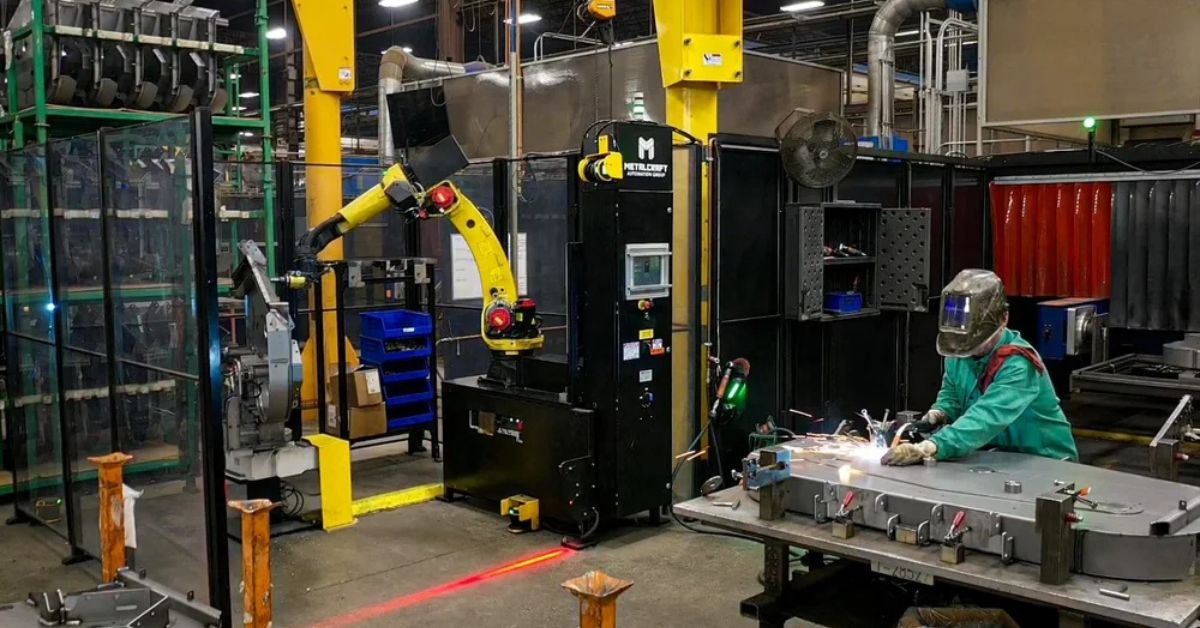
Automated part finishing has moved from a niche capability to a core strategy for shops that want to stay competitive. As production demands increase and tolerances tighten, many manufacturers look for ways to improve consistency, reduce labor strain, and keep throughput steady. Automated finishing systems solve these challenges by bringing repeatable, controlled processes into environments that once relied heavily on manual work.
This article breaks down how automated part finishing works, why it matters, and how manufacturers can apply it effectively across operations.
What Is Automated Part Finishing?
Automated part finishing refers to the use of robotics and integrated systems to complete surface finishing processes such as deburring, polishing, grinding, and sanding. Instead of relying on manual labor, these systems use programmed movements and tooling to deliver consistent results.
Manufacturers often deploy robotic arms, conveyors, and specialized end-of-arm tooling to handle different part geometries. These systems can run continuously, maintain uniform quality, and reduce variability between parts.
Why Manufacturers Are Adopting Automation in Finishing
Manual finishing creates bottlenecks. It also introduces variability that affects product quality. Automated systems address both issues while supporting scalable production.
Shops adopt automation to:
Increase throughput without adding labor
Improve surface consistency across batches
Reduce operator fatigue and injury risk
Lower scrap and rework rates
Maintain predictable cycle times
These benefits align closely with broader investments in manufacturing automation, especially in facilities that already automate machining or welding processes.
How Automated Finishing Systems Work
Automated finishing systems combine several components into a coordinated workflow. Each component plays a role in ensuring efficiency and repeatability.
Robotic arms perform the finishing tasks using programmed paths. Sensors provide feedback to adjust pressure, position, or speed. Fixtures hold parts securely in place. Software controls the sequence and ensures consistent execution.
Operators typically load raw parts into the system, and the automation handles the finishing cycle. Some setups integrate upstream and downstream processes for a fully connected production line.
Common Types of Automated Finishing Processes
Different applications require different finishing methods. Automation supports a wide range of processes, each tailored to specific materials and surface requirements.
Deburring
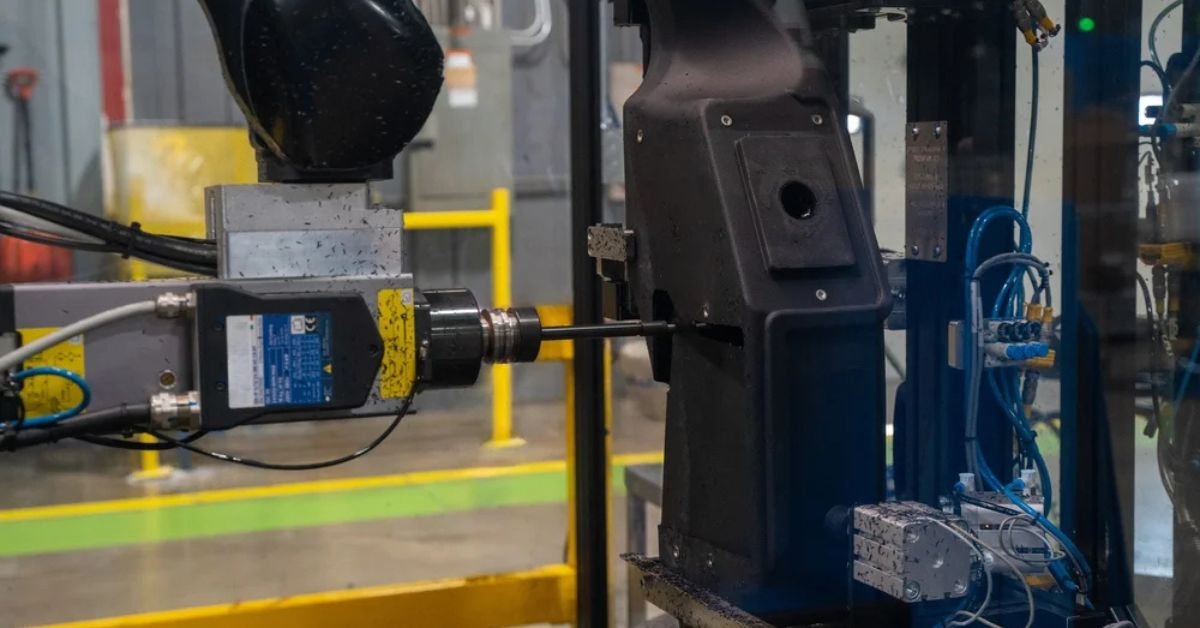
Deburring removes sharp edges or excess material left after machining. Robotic systems apply consistent pressure and motion to eliminate burrs without damaging the part.
Polishing
Polishing improves surface smoothness and appearance. Automated polishing systems maintain uniform contact and speed, which produces consistent finishes across large batches.
Grinding
Grinding removes material to achieve precise dimensions or surface finishes. Automation ensures repeatable accuracy, especially for complex geometries.
Sanding
Sanding prepares surfaces for coating or assembly. Robotic sanding systems handle repetitive motions with consistent force and coverage.
Key Components of an Automated Finishing System
Understanding system components helps manufacturers evaluate solutions more effectively. Each element contributes to overall performance and flexibility.
Robotic arms provide motion and precision. End-of-arm tooling determines how the system interacts with the part. Fixtures secure parts in consistent positions. Sensors and vision systems enhance accuracy and adaptability. Control software manages the workflow and allows operators to adjust parameters.
When these components work together, they create a system that adapts to different part designs and production needs.
Benefits of Automated Part Finishing
Automated finishing delivers measurable improvements across operations. These benefits extend beyond simple labor savings.
Consistency stands out as one of the most important advantages. Automated systems follow the same programmed path every time, which eliminates variability between operators.
Efficiency also improves. Systems run continuously with minimal downtime, which increases throughput. Shops can meet higher production demands without expanding their workforce.
Safety improves as well. Automation reduces direct human interaction with abrasive tools and repetitive motions. This shift lowers the risk of injuries and long-term strain.
Challenges to Consider Before Implementation
Automation offers clear advantages, but manufacturers must evaluate several factors before investing.
Initial setup requires planning. Engineers must define part geometries, finishing requirements, and system layout. Programming also takes time, especially for complex parts.
Cost plays a role in decision-making. While automation reduces long-term labor costs, the upfront investment can seem significant. However, many shops see strong returns through increased productivity and reduced scrap.
Integration with existing processes can also present challenges. Manufacturers must ensure that automated finishing systems align with upstream machining and downstream inspection.
How to Choose the Right Automation Solution
Selecting the right system requires a clear understanding of production goals and part requirements. Manufacturers should evaluate several key factors.
Part complexity affects tooling and programming needs. Production volume influences system capacity and ROI. Material type determines the finishing method and tooling selection.
Manufacturers should also consider flexibility. A system that handles multiple part types can provide greater long-term value.
Working with experienced automation providers helps ensure proper system design, installation, and support.
Integration with Existing Manufacturing Processes
Automated finishing systems deliver the most value when they integrate seamlessly with other operations. Many manufacturers connect finishing systems directly to CNC machining cells or robotic handling systems.
This integration reduces manual handling between steps. It also shortens cycle times and improves overall workflow efficiency.
A well-integrated system creates a continuous production flow, which minimizes downtime and maximizes output.
Industries That Benefit Most from Automated Finishing
Automated finishing supports a wide range of industries, especially those with strict quality requirements and high production volumes.
Aerospace manufacturers rely on precise surface finishes for performance and safety. Medical device companies require consistent finishes to meet regulatory standards. Firearms manufacturers benefit from repeatable finishing for both function and appearance.
Job shops and machine shops also gain value by improving efficiency and maintaining consistent quality across diverse projects.
The Role of Robotics in Finishing Applications
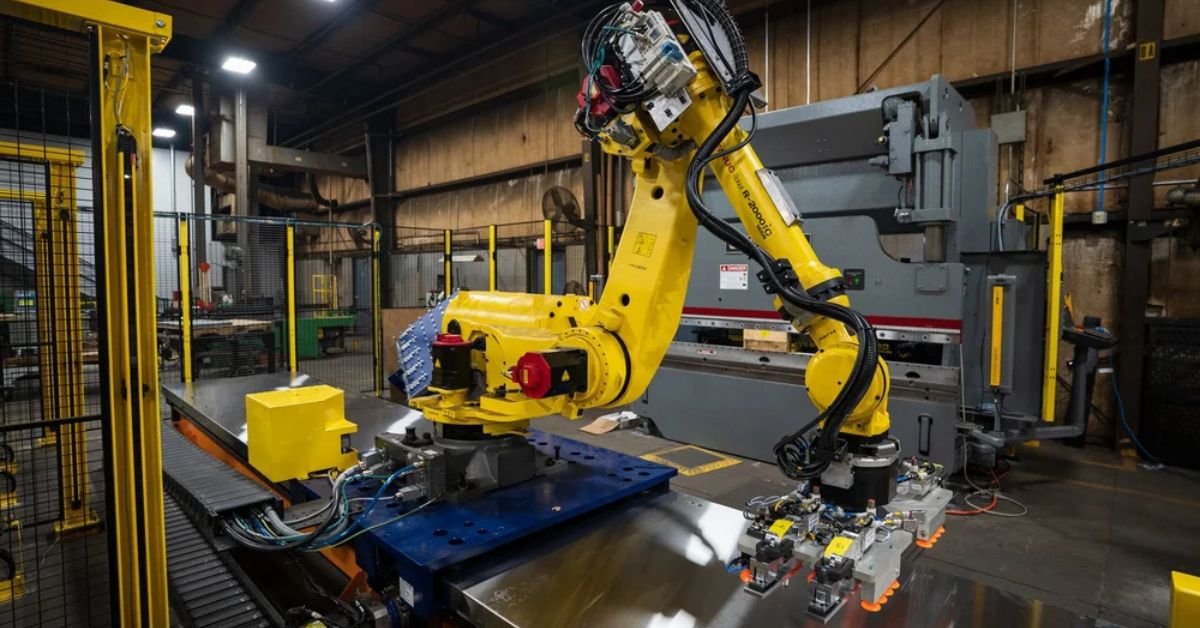
Robotics plays a central role in automated finishing. Robots provide the precision, repeatability, and flexibility required for complex tasks.
Modern robotic systems can adjust force, speed, and position in real time. This capability allows them to handle variations in part geometry or material.
Advanced programming also enables quick changeovers between part types. This flexibility supports both high-volume production and smaller batch runs.
Future Trends in Automated Part Finishing
Technology continues to evolve, and automated finishing systems are becoming more advanced and accessible.
Artificial intelligence and machine learning improve system adaptability. These technologies allow systems to optimize finishing paths and adjust parameters automatically.
Sensor technology also continues to advance. Improved feedback systems enhance precision and reduce errors.
As costs decrease and capabilities expand, more manufacturers will adopt automated finishing as a standard practice.
How Automation Improves Quality Control
Quality control remains a critical factor in manufacturing. Automated finishing systems contribute by delivering consistent, repeatable results.
Each part follows the same programmed path, which reduces variation. Sensors monitor performance and detect deviations in real time.
This level of control helps manufacturers maintain tight tolerances and meet strict quality standards. It also reduces the need for rework and inspection time.
Getting Started with Automated Part Finishing
Manufacturers that want to implement automated finishing should start with a clear plan. Identifying key pain points helps define system requirements.
Evaluating current workflows reveals opportunities for improvement. Partnering with experienced automation providers ensures proper system design and implementation.
Training also plays an important role. Operators must understand how to manage and maintain automated systems to achieve optimal performance.
Wrapping Up on Automated Part Finishing
Automated part finishing continues to reshape how manufacturers approach production. It replaces inconsistent manual processes with controlled, repeatable systems that improve efficiency and quality.
As production demands grow and labor challenges persist, automation offers a practical path forward. Manufacturers that invest in these systems position themselves for long-term success in an increasingly competitive market.