
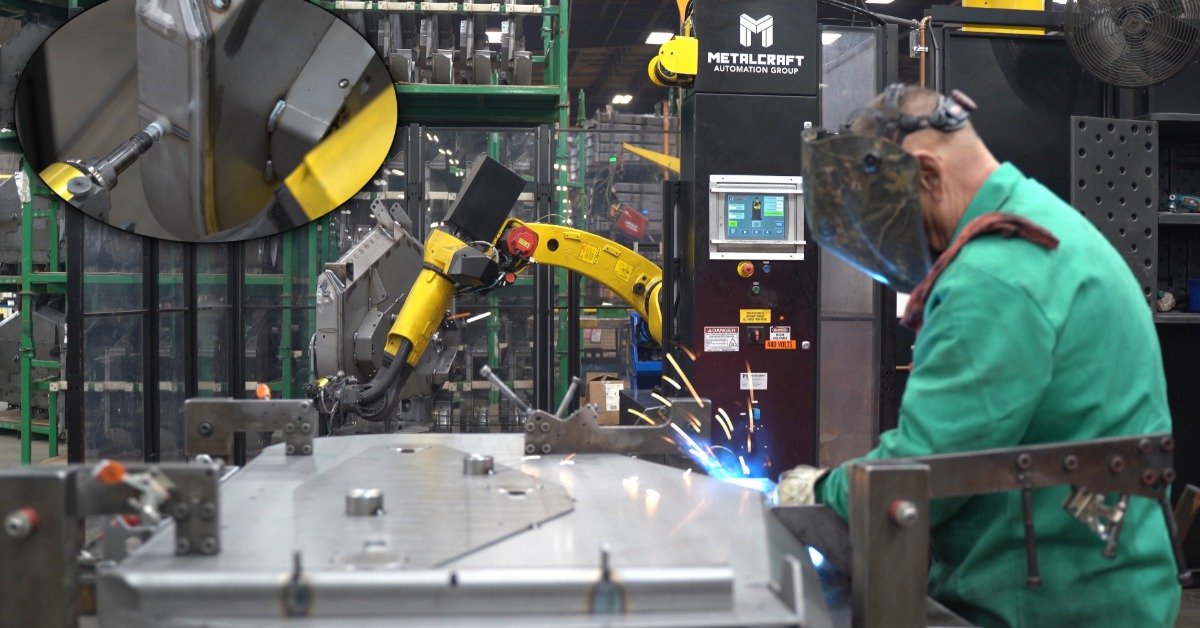
Manufacturers continue to face pressure to increase output while controlling labor costs, maintaining quality, and meeting tight production schedules. Purchasing faster equipment can help, but machine speed alone rarely solves production bottlenecks. The way an automation cell operates as a complete system often determines whether a facility reaches its throughput goals.
Smart cell design focuses on optimizing every stage of production. Equipment placement, robotic movement, material flow, programming, and data collection all contribute to higher productivity. When each component works together efficiently, manufacturers reduce downtime, eliminate unnecessary motion, and maximize machine utilization.
Whether a facility produces aerospace components, medical devices, firearms, or general industrial products, thoughtful automation planning creates measurable improvements. Companies that invest in intelligent automation layouts often achieve higher output without increasing floor space or adding labor.
What Is Smart Cell Design?
Smart cell design involves creating an automated manufacturing cell that functions as a coordinated system rather than a collection of individual machines.
Instead of optimizing only one machine, engineers evaluate every interaction throughout the process. Robotic movement, workpiece handling, machine communication, inspection, and operator interaction all receive careful consideration.
A well-designed automation cell minimizes delays between production steps. Parts move efficiently from one operation to the next while equipment performs productive work instead of waiting for upstream or downstream processes.
Modern industrial automation solutions make this level of optimization possible by integrating robotics, machine controls, sensors, and software into a unified production environment.
Why Throughput Depends on Cell Layout
Manufacturers sometimes focus heavily on machine cycle times while overlooking layout efficiency. However, poor cell design can waste significant production capacity even when machines operate at full speed.
Robots that travel excessive distances require longer cycle times. Operators who must walk between stations lose valuable production time. Material staging areas located too far from machines create unnecessary interruptions.
An optimized layout places every component where it supports the shortest possible production cycle.
Even small improvements add up over thousands of production cycles each week.
Minimize Robot Travel Time
Industrial robots perform repetitive tasks with remarkable consistency, but every movement affects productivity.
Robots should follow the shortest practical path between pickup and placement locations. Excessive travel increases cycle times without adding value.
Engineers often adjust:
Robot positioning
End-of-arm tooling orientation
Fixture placement
Machine door locations
Part presentation methods
These seemingly minor changes can eliminate seconds from each production cycle. Across an entire shift, those seconds translate into substantial throughput gains.
Design Material Flow Around Production
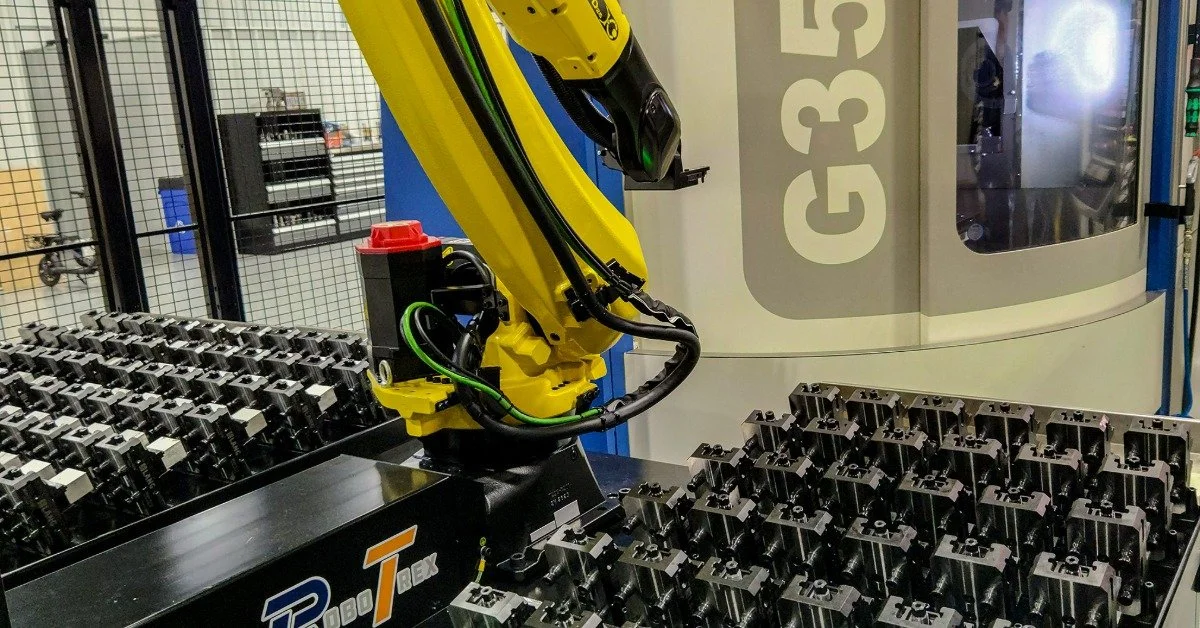
Efficient material flow keeps machines running instead of waiting for parts.
Raw material should enter the cell without disrupting robot movement or operator responsibilities. Finished parts should exit just as smoothly.
Good material flow avoids:
Cross traffic between operators and robots
Congested loading areas
Long transport distances
Multiple handling steps
Excessive inventory accumulation
When materials move predictably through the cell, production becomes more consistent and easier to manage.
Reduce Machine Idle Time
Idle machines represent lost production opportunities.
Smart automation cells minimize idle time by ensuring robots complete loading and unloading tasks as quickly as possible. While one machine performs machining operations, the robot can prepare for the next cycle instead of waiting.
Some automation systems allow one robot to service multiple CNC machines. Proper scheduling keeps every machine productive without creating bottlenecks.
Balancing robot workload with machine cycle times requires careful engineering, but the results often deliver significant improvements in overall throughput.
Balance Every Process Within the Cell
Every production cell contains multiple operations that depend on one another.
If one process requires substantially more time than the others, the entire cell slows to match its pace. Engineers refer to this as the bottleneck.
Smart cell design identifies these constraints early during planning.
Engineers evaluate:
Machining time
Robot movement
Part inspection
Loading and unloading
Fixture changes
Secondary operations
Balancing these activities allows production to flow continuously instead of stopping while equipment waits.
Use Flexible Automation for Changing Production Needs
Many manufacturers produce multiple part families throughout the year.
Rigid automation systems often require lengthy changeovers whenever production changes. Those interruptions reduce available production time and lower overall throughput.
Flexible automation addresses this challenge through programmable robotics, modular fixturing, and adaptable software.
Quick changeovers allow manufacturers to move between production runs with minimal downtime.
This flexibility also helps job shops accommodate varying customer requirements without sacrificing productivity.
Improve Communication Between Machines
Modern automation cells depend on communication.
Robots, CNC machines, sensors, vision systems, and controllers exchange information continuously during production.
Machine communication allows equipment to:
Confirm part availability
Detect completed machining cycles
Verify fixture status
Report production counts
Alert operators to faults
When equipment shares information automatically, production continues with fewer interruptions and less manual intervention.
Incorporate Real-Time Production Monitoring
Production data provides valuable insight into overall cell performance.
Modern monitoring systems track key performance indicators throughout every shift.
Manufacturers often monitor:
Cycle times
Machine utilization
Downtime events
Robot performance
Production output
Alarm history
Real-time visibility allows supervisors to identify problems before they significantly impact throughput.
Historical production data also supports continuous improvement efforts by revealing recurring bottlenecks and opportunities for optimization.
Design for Operator Efficiency
Automation reduces manual labor, but operators remain an essential part of many manufacturing environments.
Smart cell design makes operator responsibilities easier instead of more complicated.
Control panels should remain easy to access. Material loading areas should minimize lifting and unnecessary movement. Maintenance access should remain straightforward without disrupting production.
When operators spend less time walking, searching for materials, or resolving avoidable issues, they can focus on keeping production running smoothly.
Improved ergonomics also contribute to safer, more consistent operations.
Plan for Preventive Maintenance
Unexpected downtime immediately reduces throughput.
Smart automation cells simplify preventive maintenance by making critical components accessible and easy to inspect.
Maintenance planning should consider:
Lubrication access
Tool replacement
Sensor cleaning
Robot inspection
Spare part availability
Routine maintenance performed on schedule helps prevent costly production interruptions later.
Well-designed cells also allow maintenance personnel to complete service tasks quickly, minimizing lost production time.
Scale Automation Without Rebuilding the Entire Cell
Production requirements rarely remain static.
Customer demand changes. Product lines expand. New machining centers enter production.
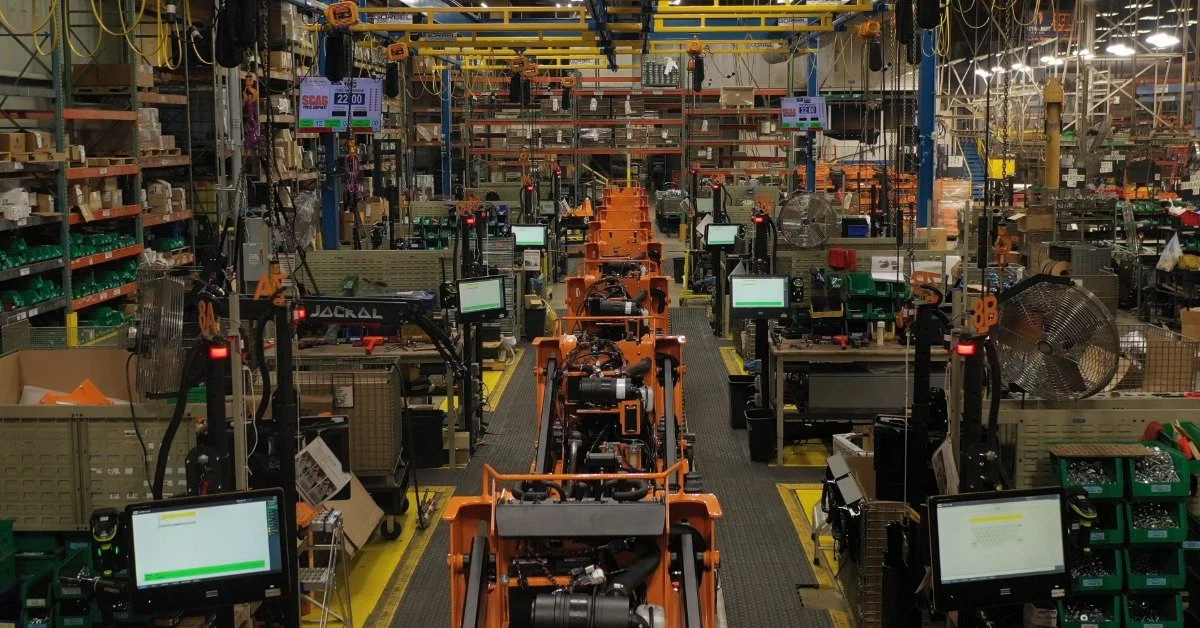
Scalable automation allows manufacturers to increase capacity without replacing the original system.
Modular cell designs make it easier to add:
Additional CNC machines
Extra robot stations
Inspection equipment
Conveyors
Material storage systems
This scalability protects the initial investment while supporting future growth.
Optimize Programming for Faster Cycles
Hardware represents only part of automation performance.
Robot programming significantly influences throughput.
Efficient robot programs eliminate unnecessary motion while maintaining safe operation. Engineers refine acceleration, deceleration, path planning, and tool orientation to reduce nonproductive movement.
Programming optimization also improves consistency by ensuring every production cycle follows the same efficient sequence.
Even small software improvements often produce measurable increases in daily output.
Consider Safety Without Sacrificing Productivity
Safety remains a top priority in every automation project.
Fortunately, modern safety technologies allow manufacturers to protect employees while maintaining high throughput.
Safety systems may include light curtains, area scanners, safety fencing, collaborative operation modes, and emergency stop systems.
Rather than slowing production unnecessarily, properly integrated safety equipment supports efficient workflows by allowing maintenance and operator tasks without creating excessive production interruptions.
Thoughtful planning ensures both safety and productivity remain priorities throughout the cell.
The Long-Term Value of Intelligent Cell Design
Maximizing throughput requires more than installing robotics or purchasing faster equipment. Every element within an automation cell influences overall production performance.
Thoughtful layouts, balanced processes, efficient robot programming, reliable communication, and continuous monitoring all contribute to higher productivity. When these components work together as a complete system, manufacturers reduce downtime, increase machine utilization, and improve production consistency.
For manufacturers seeking sustainable growth, smart cell design creates lasting value. A well-engineered automation cell supports current production demands while providing the flexibility to adapt as business needs change. Companies that prioritize intelligent system design position themselves to improve throughput, maintain quality, and remain competitive in an increasingly automated manufacturing environment.