
Machine uptime plays a critical role in manufacturing performance. Every minute that a CNC machine sits idle reduces productivity, delays delivery schedules, and increases operating costs. Manufacturers continue to search for practical ways to keep machines cutting parts instead of waiting for operators to load materials, unload finished components, or perform repetitive tasks.
Automation offers a proven solution for these challenges. RoboTrex cells from Metalcraft Automation Group help manufacturers maximize machine utilization by automating machine tending while maintaining consistent production. As part of Metalcraft Automation Group's lineup of manufacturing automation solutions, RoboTrex systems support companies that want higher productivity, improved consistency, and better use of skilled labor.
Why Machine Uptime Matters
Machine uptime measures how much time equipment spends producing parts instead of sitting idle. Even modern CNC equipment cannot generate value when operators perform manual loading, inspection, or part transfers.
Many manufacturers invest heavily in advanced CNC equipment but still experience unnecessary downtime because employees must balance several responsibilities throughout a shift. Operators often move between machines, inspect finished parts, gather raw materials, or complete paperwork. These interruptions create production gaps that reduce overall output.
Improving uptime allows manufacturers to:
Produce more parts without purchasing additional machines
Reduce production bottlenecks
Improve equipment utilization
Increase return on capital investments
Deliver orders more consistently
Small improvements in uptime often produce significant gains across an entire production schedule.
What Causes CNC Machine Downtime?
Downtime rarely results from equipment failures alone. Many interruptions occur during normal production because manual processes slow the workflow.
Common contributors include:
Manual part loading and unloading
Operators servicing multiple machines
Shift changes
Breaks and lunches
Inconsistent material staging
Delays between completed cycles
Staffing shortages
These small delays accumulate throughout each shift. Over days, weeks, and months, manufacturers lose valuable production hours that could otherwise generate revenue.
How RoboTrex Cells Improve Machine Utilization
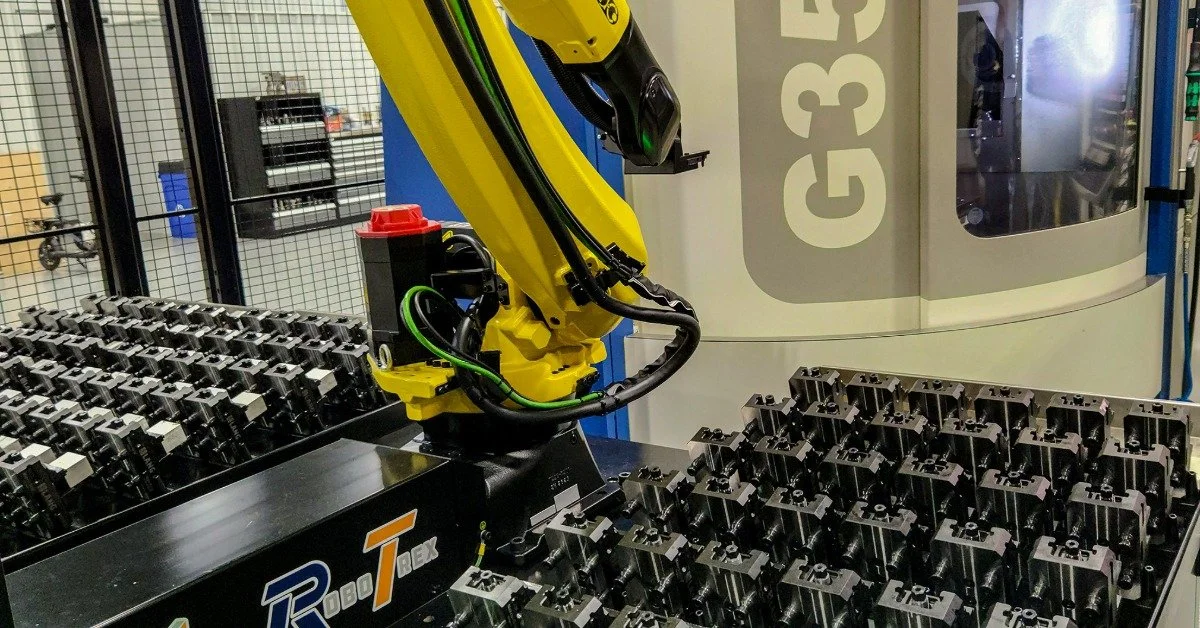
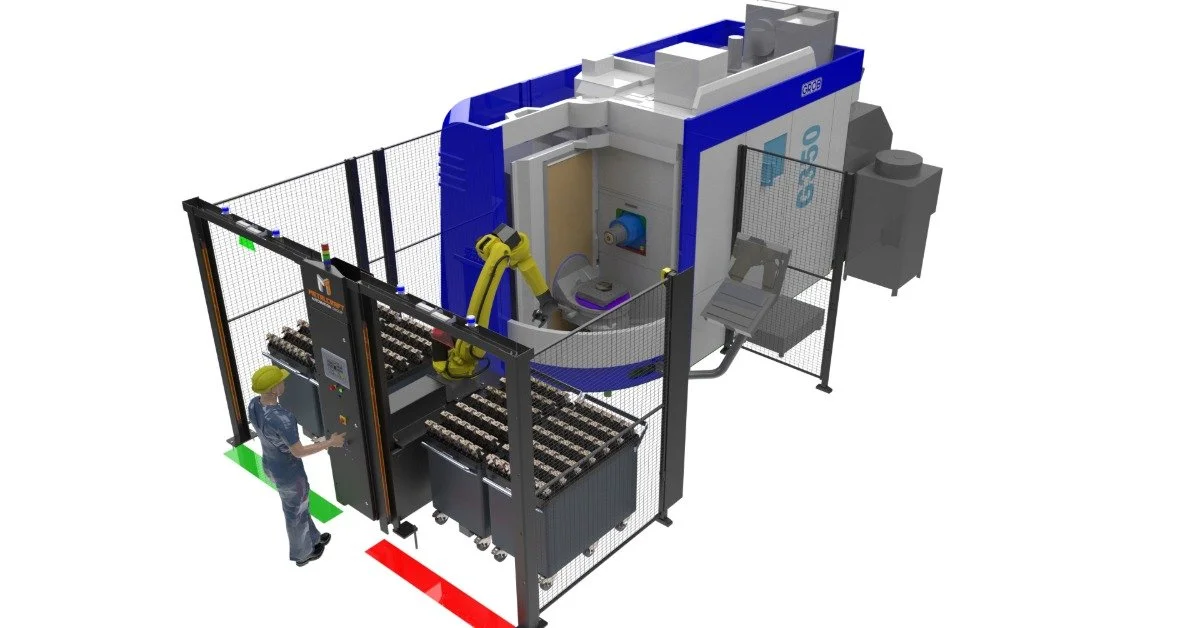
RoboTrex cells automate repetitive machine tending operations so CNC equipment continues running with minimal interruption. Instead of waiting for an operator to load the next workpiece, the robotic system performs the transfer automatically.
The robot loads raw material into the machine, removes finished parts after each cycle, and prepares the next production cycle immediately. This continuous workflow minimizes idle time between machining operations.
Because the robot performs repetitive handling tasks with consistent timing, production becomes far more predictable throughout the shift.
Supporting Continuous Production
One of the biggest advantages of robotic machine tending involves maintaining steady production over extended operating periods.
Unlike manual operations, automated cells do not lose efficiency because of fatigue or repetitive work. Every cycle follows the same programmed sequence, creating dependable production from the beginning of the shift until the end.
Manufacturers can also schedule longer production runs with fewer interruptions. When material remains available, RoboTrex cells continue tending machines while employees focus on higher-value responsibilities.
Making Better Use of Skilled Operators
Experienced machinists provide tremendous value through programming, setup, inspection, troubleshooting, and process optimization. Loading and unloading parts does not fully utilize those skills.
Automation allows manufacturers to reassign employees toward responsibilities that require technical knowledge instead of repetitive material handling.
Operators can spend more time:
Setting up new jobs
Monitoring quality
Improving machining processes
Performing preventive maintenance
Programming additional equipment
Supporting multiple automated cells
This approach helps manufacturers address skilled labor shortages while improving overall productivity.
Improving Production Consistency
Manual part handling naturally introduces variation into production timing. Different operators work at different speeds, and interruptions occur throughout every shift.
RoboTrex cells remove much of that variation by repeating identical handling sequences for every production cycle.
Consistent loading creates several operational advantages:
Stable cycle timing
Predictable scheduling
Improved workflow planning
Better production forecasting
Reduced idle machine time
Greater consistency also makes it easier for production managers to identify additional opportunities for process improvement.
Supporting Higher-Volume Production
As production demand increases, manufacturers often struggle to keep machines running efficiently with manual labor alone.
Hiring additional operators becomes increasingly difficult in many manufacturing regions. Even when companies find qualified employees, onboarding and training require additional time and resources.
RoboTrex cells allow manufacturers to increase production capacity without adding operators for every machine. One automated cell can support extended production while existing employees oversee multiple operations.
This scalability helps manufacturers respond more effectively to changing customer demand.
Increasing Overall Equipment Effectiveness
Overall Equipment Effectiveness (OEE) combines availability, performance, and quality into a single measurement of manufacturing efficiency.
Machine uptime directly influences equipment availability. Reducing idle periods improves this critical metric without requiring major equipment investments.
RoboTrex cells contribute to stronger OEE by helping manufacturers:
Reduce machine waiting time
Maintain consistent cycle performance
Support repeatable production
Minimize handling delays
Increase productive operating hours
These improvements often compound across multiple machines within a facility.
Integrating With Existing CNC Operations
Many manufacturers assume automation requires replacing existing equipment. In reality, robotic machine tending often integrates with current CNC machinery.
Metalcraft Automation Group designs automation systems that support existing production environments while simplifying implementation. Their expertise includes designing, building, installing, training, and supporting turnkey and pre-engineered automation systems for manufacturers nationwide.
Because RoboTrex cells integrate into current workflows, manufacturers can improve productivity without completely redesigning their production floor.
This practical approach helps companies modernize operations while protecting previous equipment investments.
Enhancing Flexibility Across Different Part Runs
Manufacturers rarely produce identical components indefinitely. Many facilities handle multiple product lines, changing customer requirements, and varying production volumes.
Modern automation must support this flexibility.
RoboTrex cells accommodate different machining applications by allowing manufacturers to adapt robotic handling for changing production requirements. Whether production involves longer runs or more frequent job changes, automated machine tending continues supporting efficient operation.
This flexibility helps manufacturers maintain uptime across a broader range of production scenarios.
The Role of CNC Automation in Modern Manufacturing
Manufacturers continue searching for ways to improve productivity without sacrificing quality or increasing labor demands. CNC automation has become an important strategy because it addresses several operational challenges simultaneously.
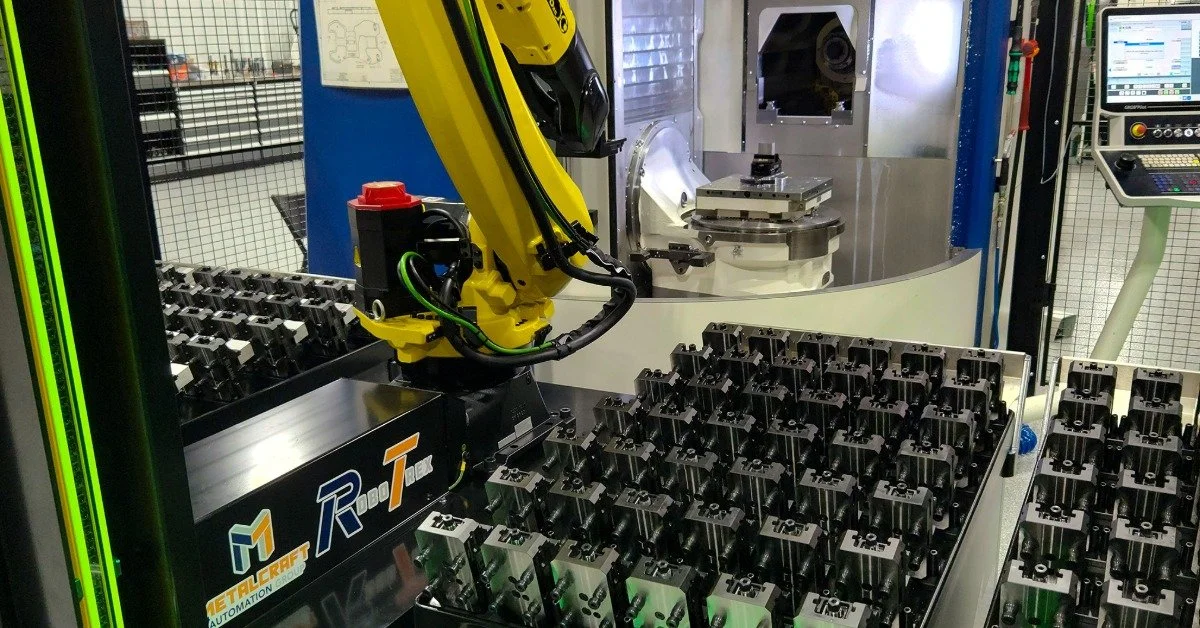
Automated machine tending increases machine utilization, improves production consistency, supports workforce efficiency, and helps companies respond to growing customer demand. Instead of relying solely on manual intervention between machining cycles, manufacturers create continuous production processes that maximize equipment investments.
As labor markets remain competitive, automation will continue playing an increasingly important role in successful manufacturing operations.
Why RoboTrex Represents a Long-Term Investment
Automation delivers more than immediate productivity improvements. It creates a stronger operational foundation for future growth.
Manufacturers that improve machine uptime position themselves to accept additional work, increase production capacity, and improve scheduling reliability without continuously expanding labor requirements.
RoboTrex cells support these long-term objectives by reducing idle machine time while helping skilled employees focus on responsibilities that generate greater value.
When combined with thoughtful implementation and ongoing support, robotic machine tending becomes an investment that continues producing operational benefits for years.
Preparing for the Future
Improving machine uptime remains one of the most effective ways to increase manufacturing productivity. Every minute spent machining parts instead of waiting for manual loading contributes to stronger equipment utilization, higher throughput, and more consistent production.
RoboTrex cells from Metalcraft Automation Group help manufacturers achieve these goals by automating repetitive machine tending tasks while allowing skilled employees to focus on higher-value work. Manufacturers across industries continue adopting automation because it addresses labor challenges, improves production consistency, and maximizes the return on CNC equipment investments. For organizations seeking greater efficiency without sacrificing flexibility, RoboTrex offers a practical solution that keeps machines running and production moving forward.