
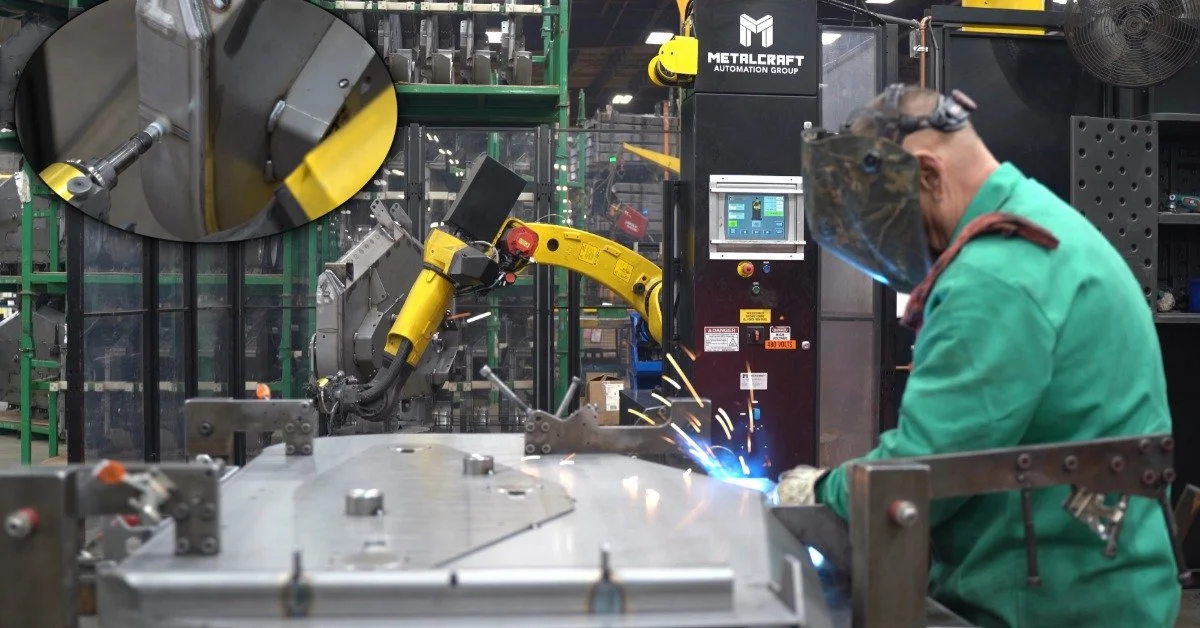
Manufacturers across the country continue to face labor shortages that affect productivity, delivery timelines, and long-term growth. Skilled workers remain difficult to recruit, while experienced employees continue to retire faster than companies can replace them. At the same time, customer expectations for quality, consistency, and lead times continue to increase.
Automation offers a practical way to address these workforce challenges without sacrificing production goals. Rather than replacing employees, automated systems help manufacturers maximize existing talent by reducing repetitive work, increasing efficiency, and allowing workers to focus on higher-value responsibilities. Companies that invest in automation often create more resilient operations that can adapt to labor market fluctuations while maintaining consistent output.
Metalcraft Automation Group designs and integrates automation systems that help manufacturers improve productivity through robotic machine tending, welding, finishing, milling, and forming solutions. These systems support businesses that need reliable production despite ongoing hiring challenges.
Why Labor Gaps Continue to Challenge Manufacturers
Manufacturing labor shortages result from several long-term trends instead of a single issue. Many experienced machinists, welders, and technicians have reached retirement age, while fewer younger workers have entered these skilled trades.
Manufacturers also compete with numerous industries for qualified employees. Finding workers with technical experience often requires longer hiring cycles and higher labor costs. Even after hiring, companies must invest significant time in training before new employees reach full productivity.
These challenges create production bottlenecks that affect nearly every aspect of manufacturing.
How Labor Shortages Impact Production
Open positions create problems beyond simply having fewer employees on the floor. Existing staff often work overtime to maintain production schedules, which increases fatigue and raises the risk of errors.
Manufacturers may also experience:
Longer production lead times
Increased overtime expenses
Delayed customer deliveries
Reduced machine utilization
Difficulty accepting new business opportunities
When labor shortages persist, companies often reach a point where additional equipment no longer increases production because operators remain unavailable.
Automation Helps Manufacturers Do More With Existing Teams
Automation allows manufacturers to maximize the effectiveness of their current workforce instead of depending entirely on new hiring.
Robotic systems handle repetitive, physically demanding, or highly repetitive tasks that consume valuable employee time. Workers can then oversee production, perform quality inspections, manage multiple machines, or complete skilled processes that require human judgment.
This balanced approach improves overall productivity while helping manufacturers operate successfully with leaner staffing levels.
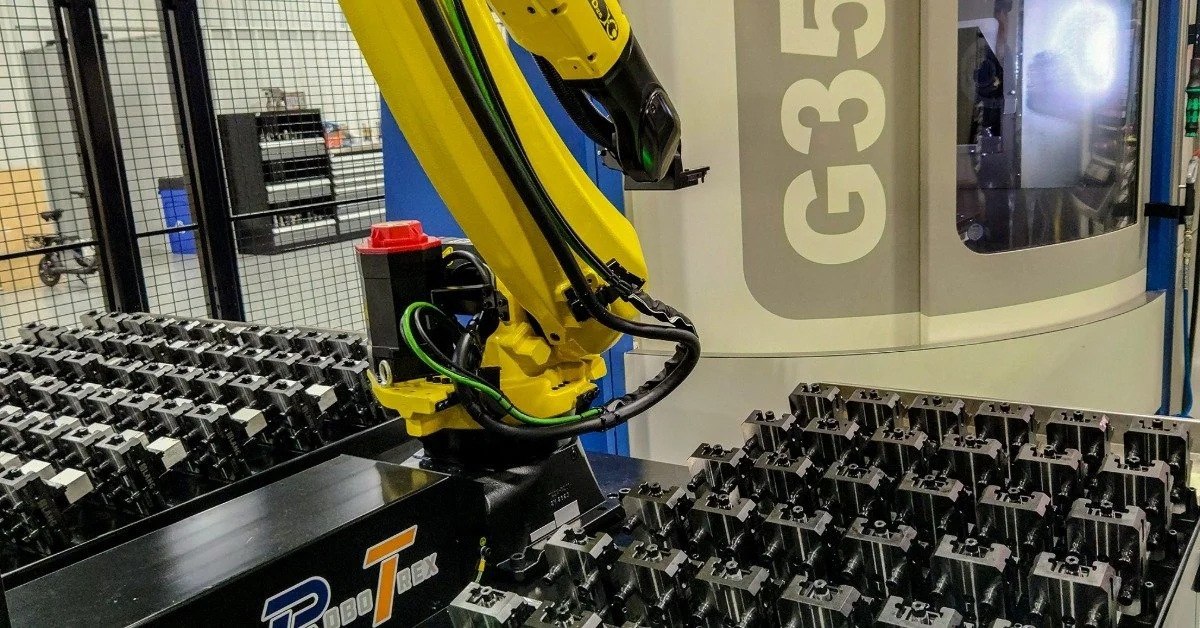
Machine Tending Reduces Operator Demands
CNC machining represents one of the most common areas where labor shortages affect production. A skilled machinist often spends valuable time loading and unloading parts instead of performing programming, setup, inspection, or process improvements.
Automated machine tending systems eliminate much of this repetitive work.
Robots consistently load raw materials, unload completed components, and keep machining centers running throughout the production cycle. Operators remain available for higher-value responsibilities that improve overall manufacturing efficiency.
Machine tending also reduces idle spindle time, helping manufacturers increase throughput without adding additional operators.
Automation Supports Multiple Shifts
Many manufacturers struggle to fully staff second and third shifts. Recruiting overnight employees often proves even more difficult than hiring daytime personnel.
Automation helps bridge this staffing gap by allowing equipment to operate with minimal supervision during evenings, overnight hours, or weekends.
Instead of requiring additional operators for every shift, manufacturers can extend production hours through automated processes that maintain consistent operation. This capability significantly increases equipment utilization while reducing dependence on difficult-to-fill positions.
Consistency Improves Regardless of Staffing Levels
Production quality often varies when companies rely heavily on manual processes during periods of workforce shortages. New employees require training, while overtime fatigue can increase variability between shifts.
Automated systems perform repetitive tasks with consistent precision throughout every production cycle.
Robotic automation delivers repeatable positioning, handling, and cycle execution without variations caused by fatigue or inconsistent manual operation. As a result, manufacturers often experience more predictable quality and fewer production interruptions.
Consistent production also simplifies quality control and improves customer confidence.
Employees Focus on Higher-Value Work
Automation changes how employees spend their time instead of eliminating the need for skilled workers.
Rather than repeatedly loading machines or performing physically repetitive motions, employees can contribute in areas that require experience and technical knowledge.
Examples include things such as:
Machine setup and programming
Preventive maintenance
Quality inspections
Production scheduling
Process optimization
Troubleshooting complex manufacturing issues
These responsibilities add significantly more value than repetitive manual tasks while creating more engaging work environments for employees.
Automation Improves Workplace Safety
Labor shortages sometimes encourage manufacturers to rely on overtime or physically demanding work that increases injury risk.
Automation reduces employee exposure to repetitive lifting, awkward movements, sharp materials, hot components, and hazardous environments.
Robotic systems safely perform tasks that involve heavy parts, welding, finishing, or continuous machine loading. Employees remain responsible for monitoring operations instead of repeatedly performing physically stressful activities.
Safer workplaces often experience improved employee retention while reducing downtime associated with workplace injuries.
Flexible Automation Adapts to Changing Production Needs
Manufacturers frequently assume automation only benefits extremely high-volume production. Modern automation systems offer much greater flexibility.
Many robotic solutions support multiple part types, varying production volumes, and changing customer demands through programmable workflows and adaptable tooling.
This flexibility makes automation practical for machine shops, job shops, and manufacturers that process a variety of components throughout the year.
As production requirements change, automation continues supporting operations without requiring significant staffing increases.
Automation Helps Companies Remain Competitive
Labor shortages directly affect a manufacturer's ability to compete. Companies that cannot consistently meet delivery schedules may lose future business regardless of product quality.
Automation strengthens competitiveness in several important ways.
Manufacturers can respond faster to customer demand, maintain reliable delivery schedules, improve production capacity, and control labor costs more effectively. These advantages become increasingly important as skilled labor remains difficult to secure.
Businesses that invest strategically in automation position themselves for sustainable long-term growth instead of reacting to ongoing workforce shortages.
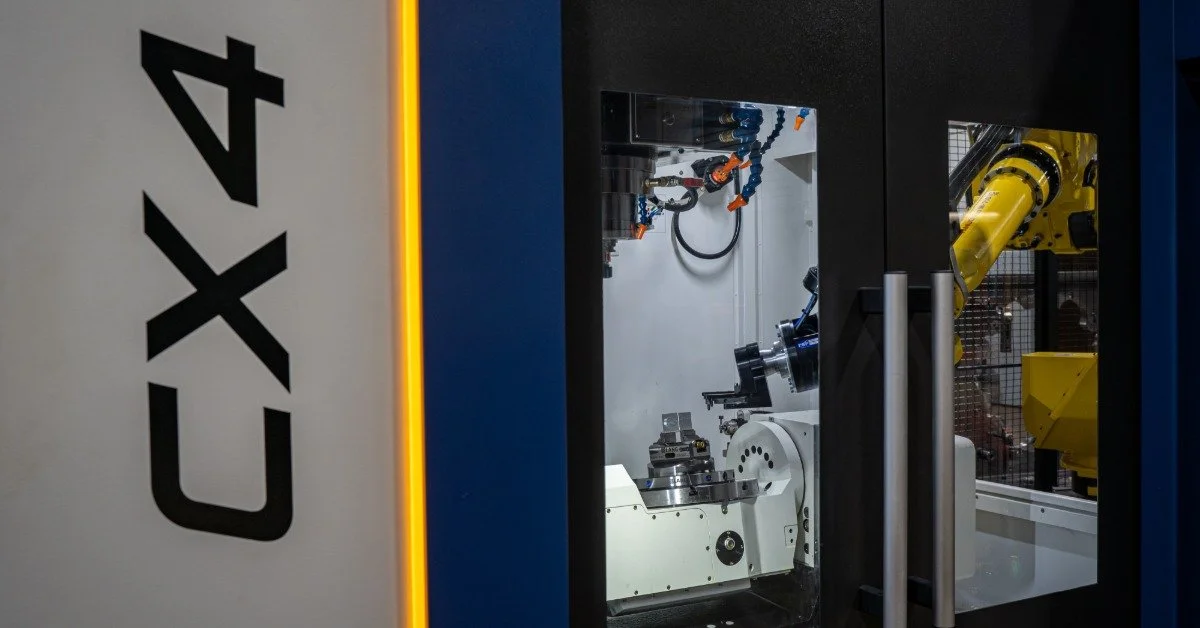
Automation Supports Workforce Retention
Finding skilled employees remains challenging, but retaining experienced workers often delivers even greater value.
Automation helps improve job satisfaction by removing repetitive and physically exhausting tasks from daily operations. Employees spend more time solving problems, improving processes, and developing technical skills.
Companies that invest in modern technology also demonstrate a commitment to improving workplace conditions. This investment often supports recruiting efforts while encouraging experienced employees to remain with the organization.
Rather than competing solely through wages, manufacturers create environments where employees can perform meaningful work with better tools and more efficient processes.
Choosing the Right Automation Strategy
Successful automation begins with identifying the manufacturing processes that create the greatest staffing challenges.
Machine tending, robotic welding, automated finishing, milling, and forming each offer opportunities to reduce labor demands while increasing productivity. Every facility operates differently, so selecting the right solution requires evaluating production goals, part volumes, machine layouts, and long-term business objectives.
Working with an experienced automation partner helps manufacturers identify solutions that integrate smoothly with existing operations while supporting future growth.
Preparing for the Future of Manufacturing
Labor shortages will likely remain an ongoing challenge for manufacturers across multiple industries. Companies that rely exclusively on expanding their workforce may continue facing production constraints, rising labor costs, and increased scheduling uncertainty.
Automation provides a sustainable path forward by helping manufacturers maximize existing talent, increase equipment utilization, and maintain consistent production regardless of hiring conditions. Modern automation systems support employees rather than replace them, allowing skilled workers to contribute where they create the greatest value.
If you're attending IMTS this September and exploring automation solutions, Metalcraft Automation Group will be exhibiting at the show. We'd love to connect and discuss how our automation systems can help improve productivity and efficiency.