
Manufacturers constantly evaluate how to run CNC machines more efficiently. Shops must balance labor availability, productivity, and operational costs while maintaining high machining standards. Many companies now compare CNC tending robots with traditional manual labor to determine which approach delivers better results.
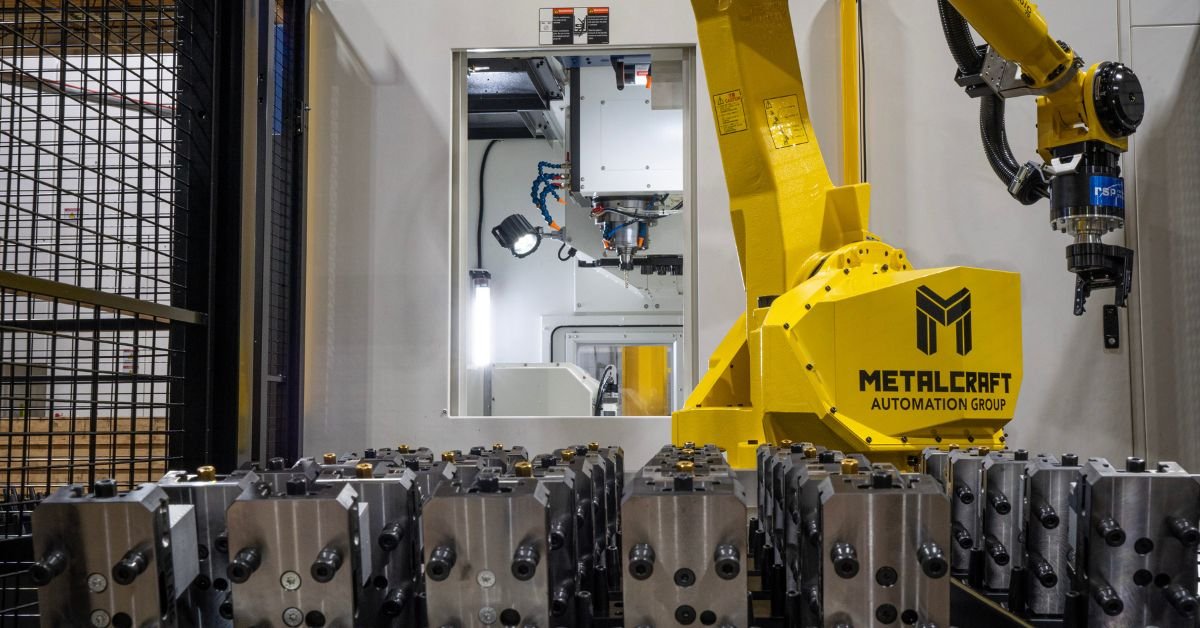
CNC tending robots automate the process of loading and unloading parts from machining centers. Operators no longer stand beside machines to handle repetitive tasks. Instead, robotics manage the workflow while workers oversee production.
Both approaches still exist in modern manufacturing. However, robotics increasingly shape the future of machining operations. Understanding the differences between manual labor and CNC tending robots helps manufacturers determine the best path forward.
Why CNC Machine Tending Matters in Modern Manufacturing
CNC machine tending directly affects production efficiency. Every machining operation requires a reliable method for loading raw parts and removing finished components.
Manual tending relies on human operators who load workpieces into machines and remove completed parts. Workers repeat this process throughout the shift.
Robotic tending systems perform the same steps automatically. Robots move parts between storage locations and machining centers with programmed precision.
Manufacturers benefit from automation because machine uptime increases and production flow stabilizes. Companies that struggle to fill operator positions often view robotic tending as a practical solution.
Automation also reduces production interruptions caused by fatigue or staffing shortages.
How Manual CNC Tending Works on the Shop Floor
Manual tending remains common in many machine shops. Operators stand beside CNC machines and perform the loading and unloading process throughout their shifts.
Workers typically perform the following tasks:
Load raw parts into fixtures
Start machining cycles
Remove finished components
Inspect parts for quality
Organize completed workpieces
This approach works well for low-volume jobs or frequent part changes. Skilled operators can quickly adapt to different setups.
However, manual tending introduces several limitations. Human operators require breaks, shift changes, and consistent supervision. Production speed often depends on how quickly workers complete repetitive tasks.
Machine idle time increases when operators manage multiple machines simultaneously.
What CNC Tending Robots Do Differently
CNC tending robots automate part handling through programmed workflows. Robotic arms retrieve raw parts, place them into fixtures, and remove finished components after machining cycles complete.
Robots repeat these actions with consistent speed and accuracy. Sensors, vision systems, and programmable logic controllers guide the process.
Robotic systems often include additional features such as part staging, pallet systems, and automated storage. These capabilities allow robots to run machining centers continuously without constant human involvement. Automation also allows shops to keep machines running outside traditional working hours.
Productivity Comparison: Robots vs Manual Labor
Production output often determines whether manufacturers adopt robotics. CNC machines produce value only when cutting metal.
Manual tending limits production speed because human operators must physically move parts between cycles. Workers may also monitor multiple machines, which creates unavoidable delays.
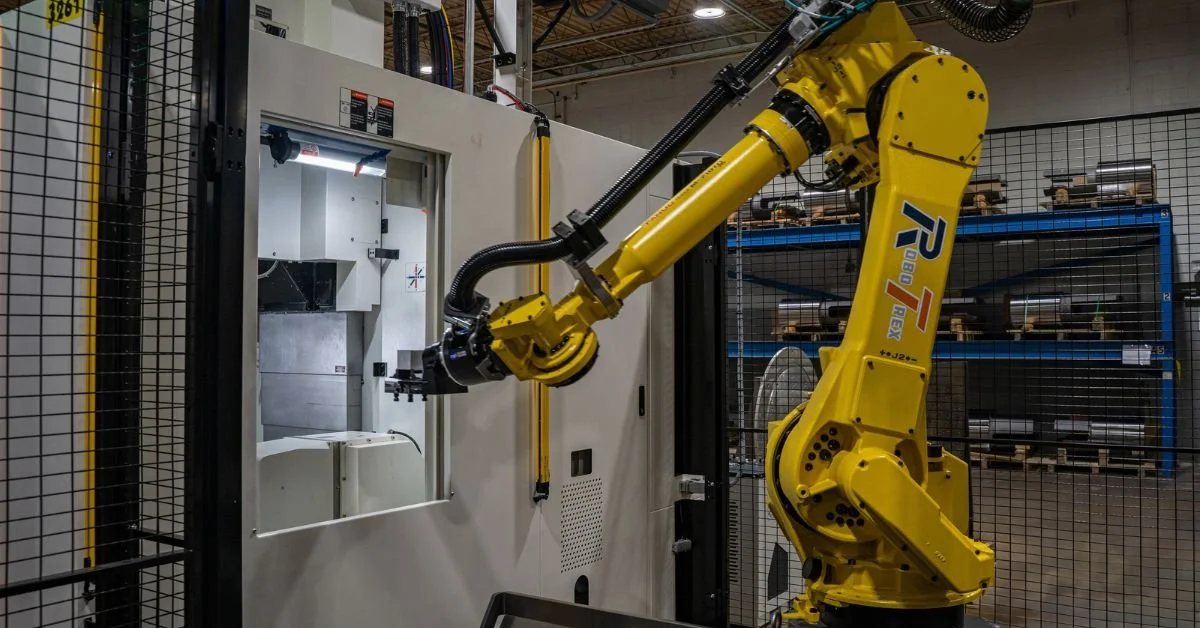
Robotic tending systems eliminate these interruptions. Robots load and unload machines immediately after cycles finish.
Consistent cycle timing improves throughput and reduces idle machine time.
Many automated systems also support unattended production, which allows machines to operate overnight or during weekends. This extended runtime significantly increases overall output.
Labor Challenges in Modern Manufacturing
Manufacturing companies face ongoing labor shortages. Skilled machinists and machine operators remain difficult to recruit and retain.
Manual CNC tending requires operators to perform repetitive tasks for long periods. These jobs often involve standing beside machines for full shifts while managing production schedules.
CNC tending robots address this challenge by shifting workers into higher-value responsibilities. Employees supervise production cells, perform quality checks, and manage programming tasks instead of repeating manual loading steps.
Manufacturers benefit from improved workforce utilization when automation handles repetitive tasks.
Consistency and Quality Control
Manufacturing quality depends heavily on process consistency. Human operators can introduce variation during repetitive production tasks.
Manual tending may lead to inconsistent part placement, delayed cycle starts, or accidental fixture misalignment.
Robotic tending systems eliminate most of these issues. Robots follow programmed movements with high precision.
Automated loading ensures that parts enter fixtures correctly every time. Consistent cycle timing also improves machining stability.
Manufacturers often see improved part quality when robotic systems manage machine tending.
Workplace Safety Considerations
Machine shops contain several workplace hazards. Operators frequently interact with moving equipment, sharp materials, and hot metal chips.
Manual tending requires workers to stand close to machining centers during operation. This proximity increases exposure to potential injuries.
CNC tending robots create a safer working environment by separating employees from repetitive machine interaction.
Robotic cells typically include safety enclosures, sensors, and emergency stop systems. These safeguards protect operators while automation manages the physical workload.
Reducing repetitive manual tasks also helps prevent fatigue-related injuries.
Manufacturers that prioritize workplace safety often view automation as a long-term improvement for shop floor operations.
Cost Comparison Over Time
Some manufacturers initially view robotic tending as expensive. Automation systems require upfront investment for equipment, integration, and training.
However, long-term operational costs often favor automation.
Manual tending requires ongoing labor expenses. Wages, benefits, training, and turnover all contribute to the total cost of manual machine operation.
Robotic systems operate continuously with minimal labor requirements. Automation reduces staffing pressure and stabilizes production costs.
Manufacturers frequently evaluate automation through return-on-investment timelines. Many CNC tending systems achieve payback within a few years due to improved productivity and reduced labor dependency.
Shops that run high-volume machining operations often see the strongest financial benefits.
Where Manual Labor Still Makes Sense
Automation does not replace every machining task. Some manufacturing environments still benefit from manual CNC tending.
Small production runs or frequent part changes may not justify robotic integration. Shops that focus on prototype work or custom machining often rely on skilled operators to handle flexible production needs.
Manual tending also supports situations where complex setups require human judgment.
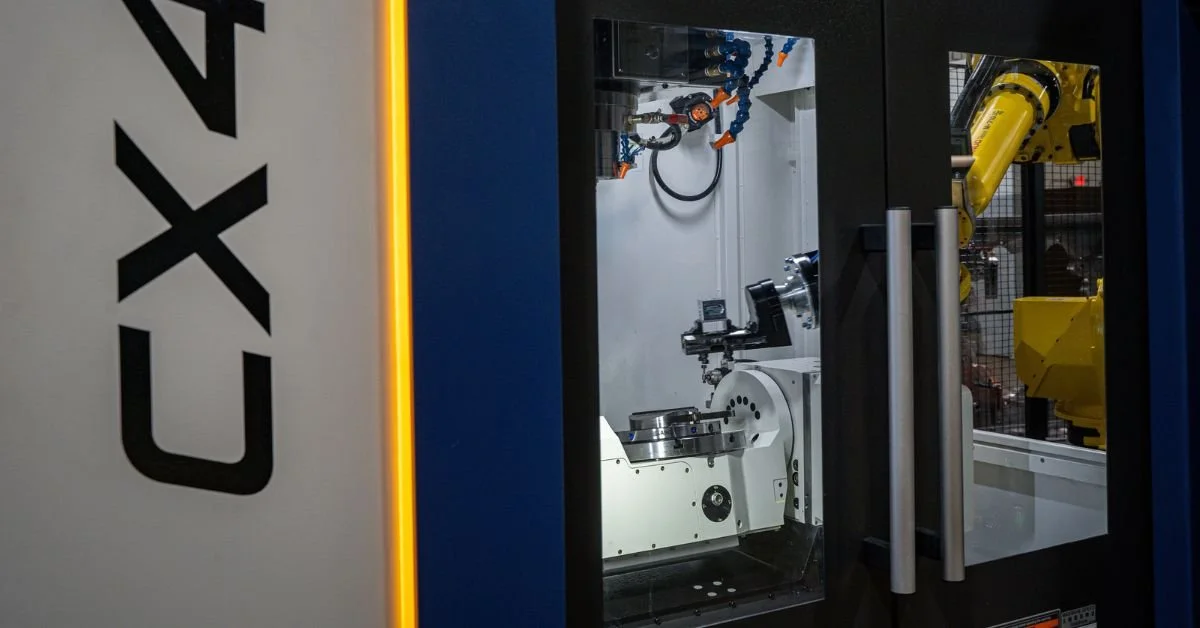
Many manufacturers use a hybrid approach. Robots handle high-volume production while operators manage specialized machining tasks.
This strategy allows companies to balance automation efficiency with operational flexibility.
The Role of Industrial Automation in CNC Machining
Automation technologies continue to reshape manufacturing processes. Robotics, machine vision systems, and smart controls allow shops to optimize production with greater precision.
Many manufacturers adopt robotics as part of broader industrial automation solutions that improve efficiency across machining operations.
Automated CNC tending integrates with other technologies such as pallet systems, inspection equipment, and data monitoring tools.
These integrated systems create smarter production environments where machines communicate, track performance, and reduce downtime.
Manufacturers increasingly rely on automation to stay competitive in demanding markets such as aerospace, medical manufacturing, and firearms production.
Automation systems that support CNC machining now represent a key investment for forward-thinking manufacturers.
Long-Term Manufacturing Competitiveness
Manufacturers must continuously improve efficiency to remain competitive. Production speed, labor availability, and cost control all influence long-term success.
CNC tending robots allow shops to increase machine utilization and reduce reliance on manual labor. Automation also supports consistent quality and safer working environments.
Manual labor still plays a role in machining operations. Skilled machinists remain essential for programming, setup, inspection, and process improvement.
However, robotic tending systems increasingly handle repetitive production tasks that once required constant operator involvement.
Manufacturers that integrate robotics often achieve higher output with fewer production interruptions.
As labor shortages continue and production demands grow, CNC tending robots provide a practical path toward sustainable manufacturing performance.