
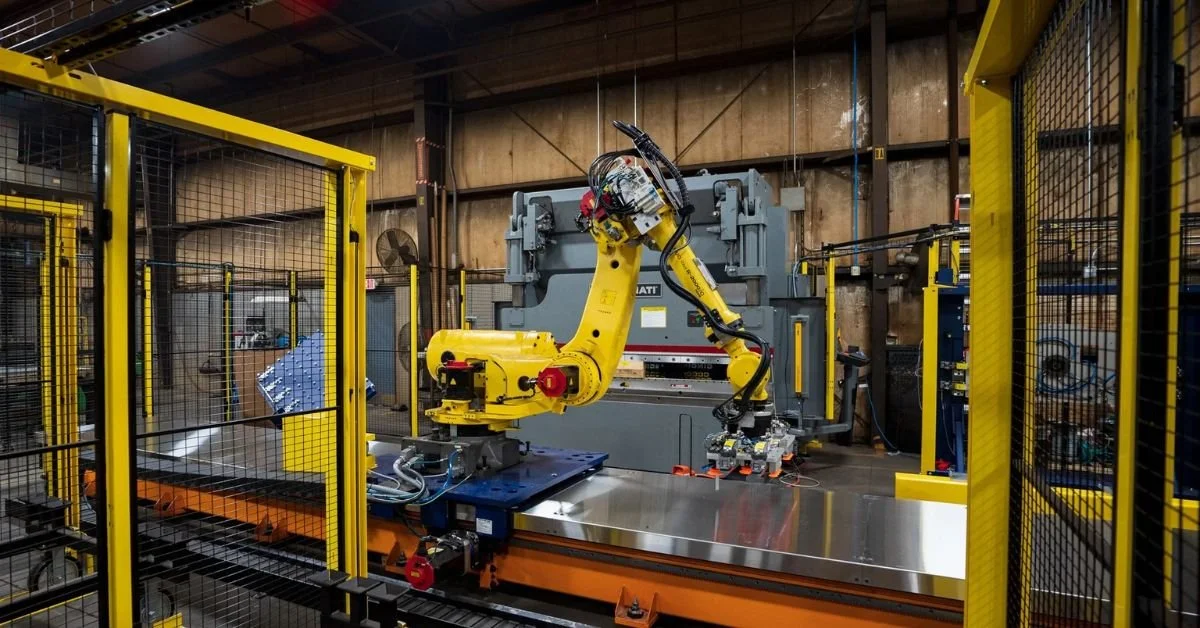
Robotic forming helps manufacturers increase consistency, reduce labor strain, and scale production without sacrificing quality. Many machine shops and product manufacturers recognize the opportunity, but they often struggle with where to begin.
A structured plan removes uncertainty and reduces risk. When you follow a clear process, you align equipment, workflows, and people before installation begins.
Use the steps below to plan and execute a successful robotic forming integration.
Step 1: Define Your Forming Objectives
Start with clear production goals. Identify what you want robotic forming to accomplish within your operation.
Ask practical questions:
Do you need higher throughput?
Do you want to reduce operator fatigue?
Do you need tighter forming tolerances?
Do you want to run lights-out shifts?
Tie your automation investment directly to measurable outcomes such as cycle time reduction, scrap reduction, or increased spindle utilization. Clear objectives guide every technical decision that follows.
Step 2: Analyze Current Forming Processes
Evaluate your existing forming workflow in detail. Document cycle times, changeover times, labor involvement, and material flow.
Look closely at:
Press brake utilization rates
Manual handling steps
Tooling change frequency
Quality inspection points
Identify bottlenecks and inconsistencies. Many forming operations rely heavily on skilled operators to compensate for variability. Robotic integration works best when you understand exactly where variation occurs. Accurate data prevents over- or under-sizing your robotic system.
Step 3: Select the Right Parts for Automation
Not every forming application fits robotic integration. Choose parts that provide consistent geometry and repeatable volumes.
Ideal candidates typically include:
Medium-to-high production runs
Repeat orders with stable designs
Parts with manageable weight and dimensions
Jobs that strain operators due to size or repetition
Low-volume, highly variable work may require flexible programming strategies, but consistent part families deliver faster returns on investment.
Prioritize applications that generate immediate operational impact.
Step 4: Evaluate Tooling and Fixturing Requirements
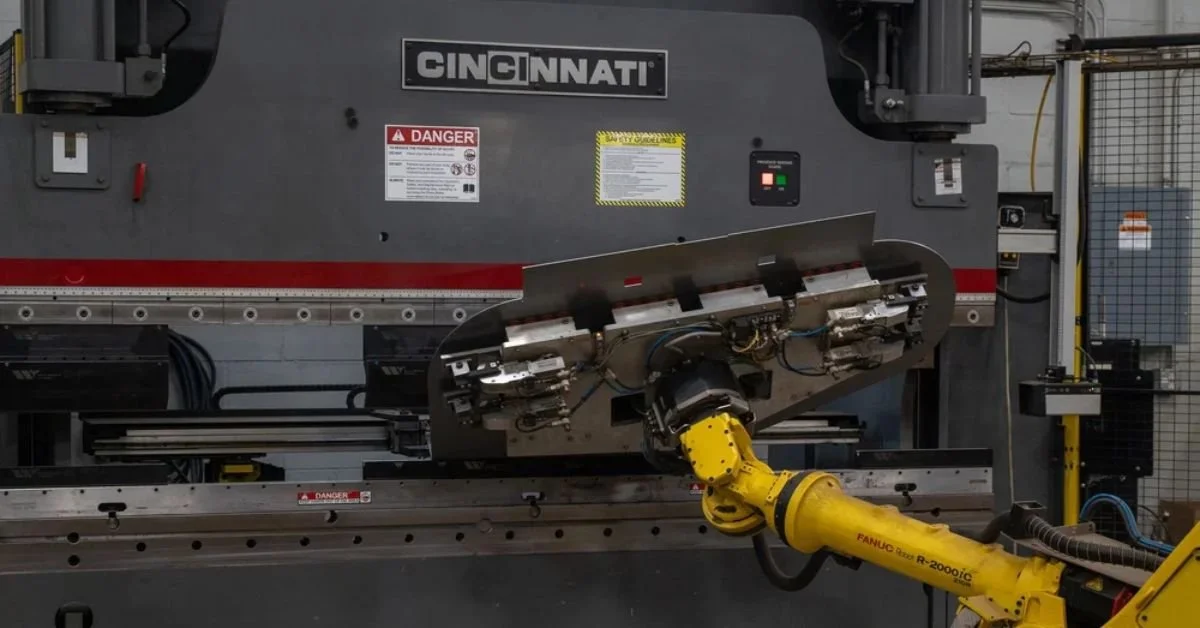
Robotic forming demands predictable part positioning. Review your tooling and fixturing setup early in the planning process.
Assess:
Die alignment consistency
Tool wear patterns
Part referencing strategy
Gripper compatibility
You may need to upgrade tooling to improve repeatability. Precision tooling reduces error and improves robotic accuracy.
Design fixtures that allow reliable part pickup and placement. A well-engineered end-of-arm tool makes or breaks system performance.
Step 5: Confirm Floor Space and Layout Compatibility
Space planning affects efficiency and safety. Map out the physical footprint of the robotic forming cell before installation.
Include:
Robot reach envelope
Press brake positioning
Material staging areas
Operator access points
Safety fencing and light curtains
Make sure the layout supports smooth material flow. Avoid designs that create unnecessary walking paths or congestion. Efficient layouts reduce handling time and maximize production output.
Step 6: Integrate Safety from the Start
Safety planning should never come after equipment installation. Incorporate safety standards into the initial design phase.
Consider:
Risk assessments
Emergency stop locations
Guarding requirements
Safe robot speeds
Collaborative vs. industrial robot needs
Modern robotic systems allow configurable safety zones and monitored stops. When you plan safety early, you avoid costly retrofits and delays.
Clear safety protocols also improve operator confidence and adoption.
Step 7: Align Forming Automation with Upstream and Downstream Processes
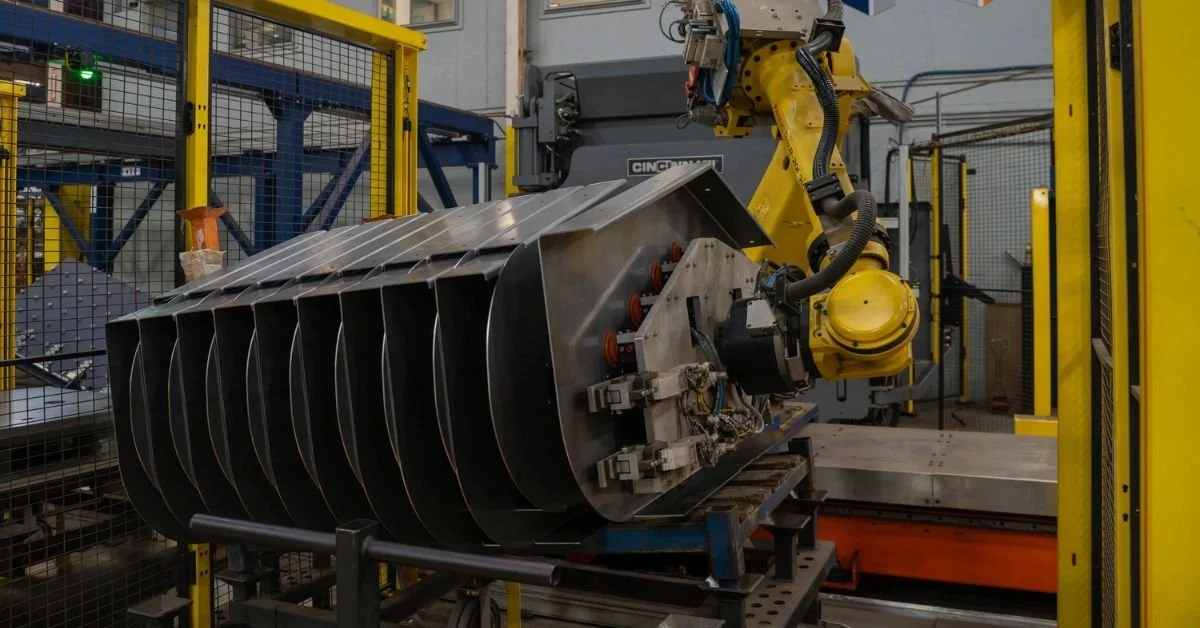
Robotic forming does not operate in isolation. Evaluate how it connects to machining, welding, finishing, or assembly.
Ask:
How will parts enter the cell?
How will finished parts exit?
Does your ERP system track automated output?
Can material handling systems scale with production?
Many manufacturers integrate forming automation alongside other systems such as
Robotic Welding to create fully connected production cells. Coordinated workflows eliminate idle time and reduce manual transfer steps. Special Note: Automated forming will increase part consistency which drastically helps with robotic welding processes.
Integration across processes strengthens overall manufacturing automation strategy.
Step 8: Plan Programming and Changeover Strategy
Programming flexibility determines long-term success. Your team must manage part variations without excessive downtime.
Develop a strategy for:
Program storage and naming conventions
Revision tracking
Quick gripper adjustments
Offline programming capabilities
Standardized program templates help reduce setup time. When engineers design parts with automation in mind, they simplify programming complexity.
Efficient changeovers protect productivity and improve return on investment.
Step 9: Prepare and Train Your Team
Robotic forming shifts operator responsibilities. Instead of manual bending, team members monitor system performance, manage programs, and oversee quality.
Provide training in:
Robot interface navigation
Basic troubleshooting
Preventative maintenance tasks
Safety procedures
Clear communication reduces resistance to change. Employees who understand the benefits of automation often become its strongest advocates.
Step 10: Validate Performance Before Full Production
Before scaling to full output, conduct thorough system testing. Validate accuracy, repeatability, and cycle times under real production conditions.
Measure:
First-piece inspection results
Cycle consistency
Scrap rates
Uptime percentages
Make adjustments based on data. Fine-tune grip force, bend sequencing, and motion paths to improve performance. A structured validation phase protects production schedules and customer commitments.
Step 11: Establish Ongoing Maintenance and Support
Robotic forming systems require regular maintenance to maintain performance. Develop a preventive maintenance plan before launch.
Include:
Scheduled robot inspections
Lubrication intervals
Tooling wear checks
Software updates
Document service procedures clearly. A proactive approach reduces unexpected downtime and extends system lifespan. Reliable support ensures your investment continues delivering value for years.
Step 12: Track ROI and Continuous Improvement
After integration, measure performance against your original objectives. Compare production metrics before and after automation.
Track improvements in:
Labor allocation
Throughput
Quality consistency
Overtime reduction
On-time delivery rates
Use data to identify new opportunities for expansion. Many manufacturers begin with one forming cell and expand once they see measurable gains. Continuous improvement keeps automation aligned with business growth.
Key Considerations for Long-Term Success
Robotic forming integration succeeds when planning, engineering, and operations align. Keep these principles in mind:
Define clear goals before selecting equipment
Design layouts for efficiency and safety
Standardize programming and documentation
Train operators thoroughly
Monitor performance consistently
When teams follow a structured checklist, they reduce risk and shorten the path to productivity.
Building a Scalable Forming Automation Strategy
Robotic forming provides more than labor savings. It improves consistency, supports workforce development, and strengthens production resilience.
Machine shops and manufacturers that approach integration methodically position themselves for scalable growth. They create predictable workflows, reduce variability, and build automation-ready processes.
With careful planning and disciplined execution, robotic forming becomes a strategic asset rather than a standalone project.
Ready to Explore Robotic Forming Integration?
If you want to evaluate how robotic forming fits into your operation, start with a detailed process review. Identify opportunities, assess compatibility, and map out your next steps.
A structured checklist helps you move forward with clarity and confidence. When you plan carefully, robotic forming transforms productivity and prepares your operation for the next phase of growth.