
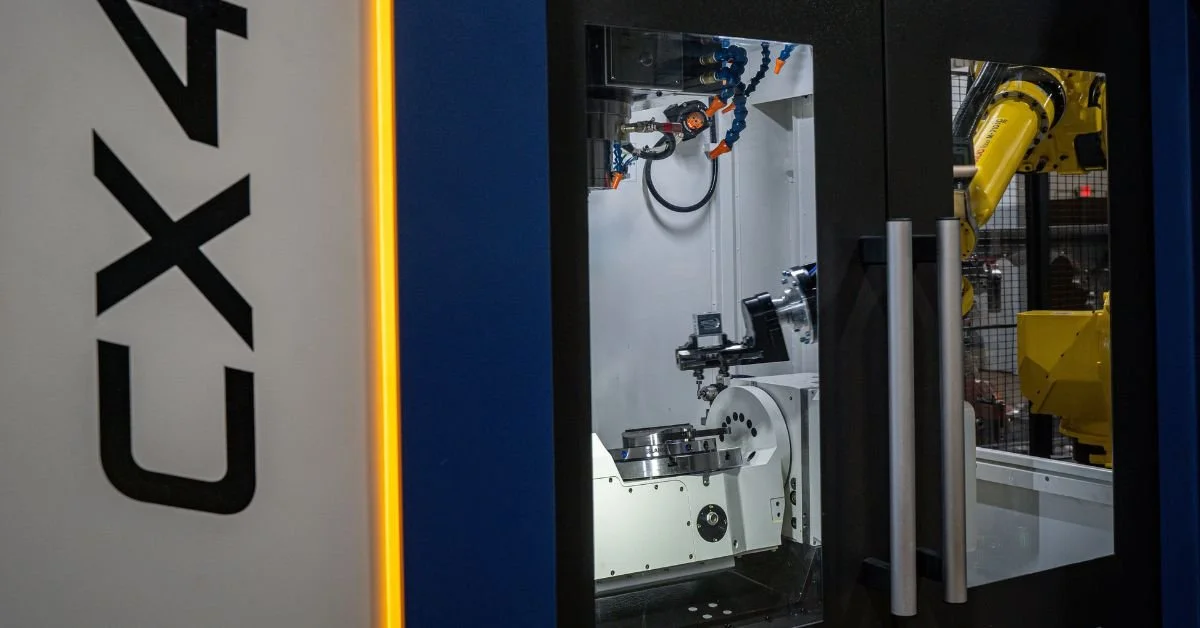
The drive for perfection in manufacturing is relentless. In the world of CNC machining, precision is not just a goal; it is the standard. Achieving microscopic accuracy, part after part, is what separates successful shops from the rest. Automation is the key to unlocking this next level of precision, transforming your operations from proficient to exceptional. By integrating automated systems, you can eliminate variables, enhance consistency, and push the boundaries of what your machines can achieve.
Let’s take a look at the decisive ways automation enhances CNC precision. We will examine how these technologies deliver consistent quality, minimize human error, optimize machine performance, and provide the data-driven insights needed to maintain a competitive edge. Prepare to see how you can transform your production floor into a model of efficiency and accuracy.
Automation Reduces Human Error
One of the most significant advantages of automation in CNC machining is the drastic reduction of human error. Manual operations, no matter how skilled the operator is, are susceptible to inconsistencies. Factors like fatigue, distraction, and slight variations in technique can lead to deviations that compromise part quality. Automation removes these variables from the equation, ensuring every action is performed with machinelike consistency.
By entrusting repetitive tasks to a robotic system, you create a stable and predictable production environment where precision is the baseline, not a variable. This allows your team to redirect their expertise to process improvement and quality oversight, maximizing their impact.
Automated Systems Ensure Consistent Loading
Properly and consistently loading raw material into a CNC machine is fundamental to achieving precision. Any misalignment of the workpiece can lead to inaccurate cuts, scrapped parts, and wasted material. Automated loading systems place each workpiece in the exact same position and orientation every single time.
This level of repeatability is virtually impossible to achieve manually over long production runs. The robot’s unvarying placement ensures the machine’s starting reference point is always correct, which is important for maintaining tight tolerances throughout the machining process. This consistency is a cornerstone of high-precision manufacturing.
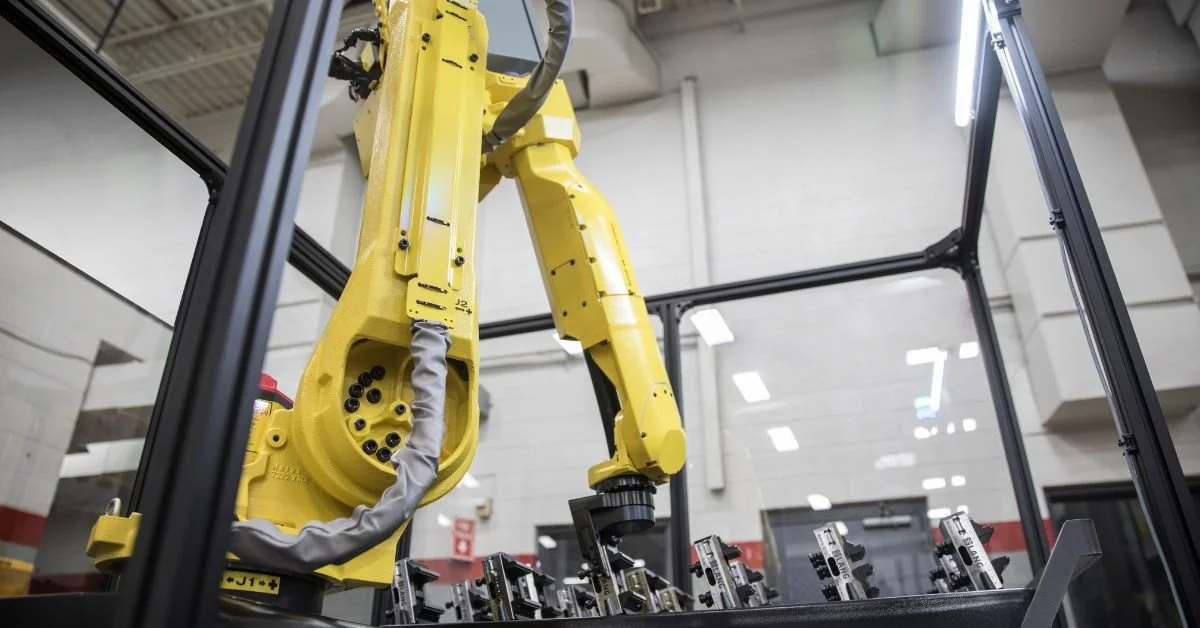
Robots Maintain Unwavering Tool Management
Effective tool management is a priority for precision machining. A worn or damaged tool can quickly degrade the surface finish and dimensional accuracy of a part. Automated tool management systems continuously monitor the condition of cutting tools, tracking their usage and predicting their lifespan.
These systems can automatically replace a worn tool with a new one from a magazine without any operator intervention. This proactive approach prevents the use of compromised tools, making sure that the cutting edge is always sharp and capable of producing the highest quality parts. By automating this process, you eliminate the risk of tool-related defects and maintain peak machine performance.
Automation Enables In-Process Quality Control
Automation introduces the ability to perform in-process quality control, a game-changer for precision manufacturing. Automated probing and vision systems can measure critical features of a part while it is still in the machine. If it detects any deviation from the specified tolerance, the system can immediately adjust the machine’s parameters to correct it on the fly.
This real-time feedback loop ensures that every part meets quality standards before it is even finished. This is a significant leap forward from traditional post-process inspection, which can only identify defects after production is complete, leading to costly rework or scrap. In-process inspection guarantees quality and optimizes the entire production flow.
Automated Systems Stabilize Thermal Conditions
Thermal expansion and contraction can have a significant impact on CNC precision. As a machine runs, heat is generated by the spindle, motors, and the cutting process itself. This heat can cause the machine’s components and the workpiece to expand, leading to dimensional inaccuracies. Automated systems help stabilize the thermal environment.
For example, robotic loaders can operate within enclosed cells where temperature is tightly controlled. By ensuring a consistent production rhythm, automation prevents large temperature swings that can occur with intermittent manual operation. This thermal stability is ideal for maintaining the tightest tolerances on high-precision components.
IMAGE B
Automation Facilitates Predictive Maintenance
Beyond just monitoring, the data collected by automated systems enables predictive maintenance. By analyzing patterns in machine performance, the system can predict when a component is likely to fail before it actually happens. This allows you to schedule maintenance proactively, avoiding unexpected downtime and costly emergency repairs.
A failing component, such as a spindle bearing, can degrade performance long before it fails completely, leading to a gradual decline in part quality that might otherwise go unnoticed. Predictive maintenance helps to make sure your machines always operate in peak condition.
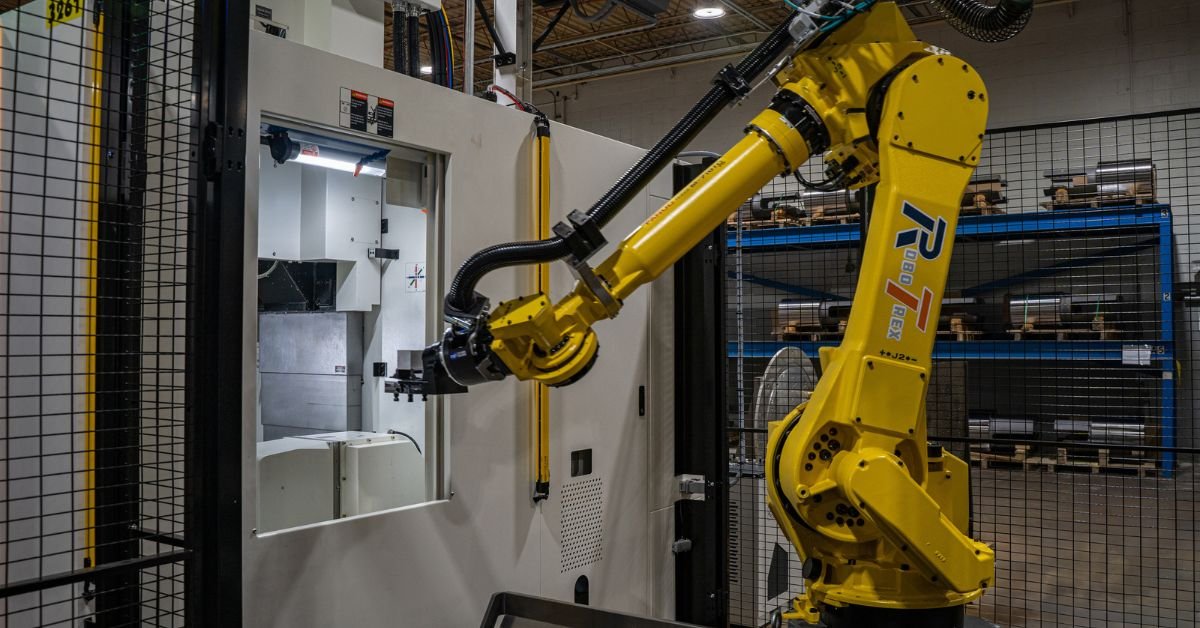
Automated Material Handling Reduces Vibrations
Even subtle vibrations can compromise the precision of a CNC machine. The manual loading and unloading of heavy workpieces can create shocks and vibrations that disturb the machine's delicate alignment. Automated material handling systems, such as gantry loaders or robotic arms, perform these tasks with smooth, controlled movements.
This gentle handling minimizes disturbances, helping to preserve the machine's calibration and accuracy over time. It is a subtle but important way that CNC automation contributes to a more stable and precise manufacturing environment.
Automation Enhances Operator Focus and Safety
When operators are free from the repetitive and physically demanding tasks of machine tending, they can devote their full attention to higher-level responsibilities. These include:
Programming and setup optimization
Overseeing quality control
Process improvement initiatives
This shift in focus allows them to apply their skills and experience where they can add the most value, leading to better overall outcomes. Furthermore, automation improves workplace safety by removing operators from direct interaction with moving machinery and heavy parts, creating a safer and more productive work environment.
Take Control of Your Precision
The evidence is clear: automation is the definitive path to superior CNC precision. By integrating automated systems, you eliminate the variables of human error, ensure unwavering consistency, and gain the data-driven insights needed to achieve manufacturing excellence.
These systems work tirelessly to maintain optimal conditions, from consistent part loading and tool management to thermal stability and in-process quality control. The result is a production environment that delivers higher quality parts, reduces waste, and boosts productivity.
It is time to elevate your operations. Embracing automation is not just an investment in technology; it is an investment in the future of your business. Take control of your precision and unlock your shop's full potential.