
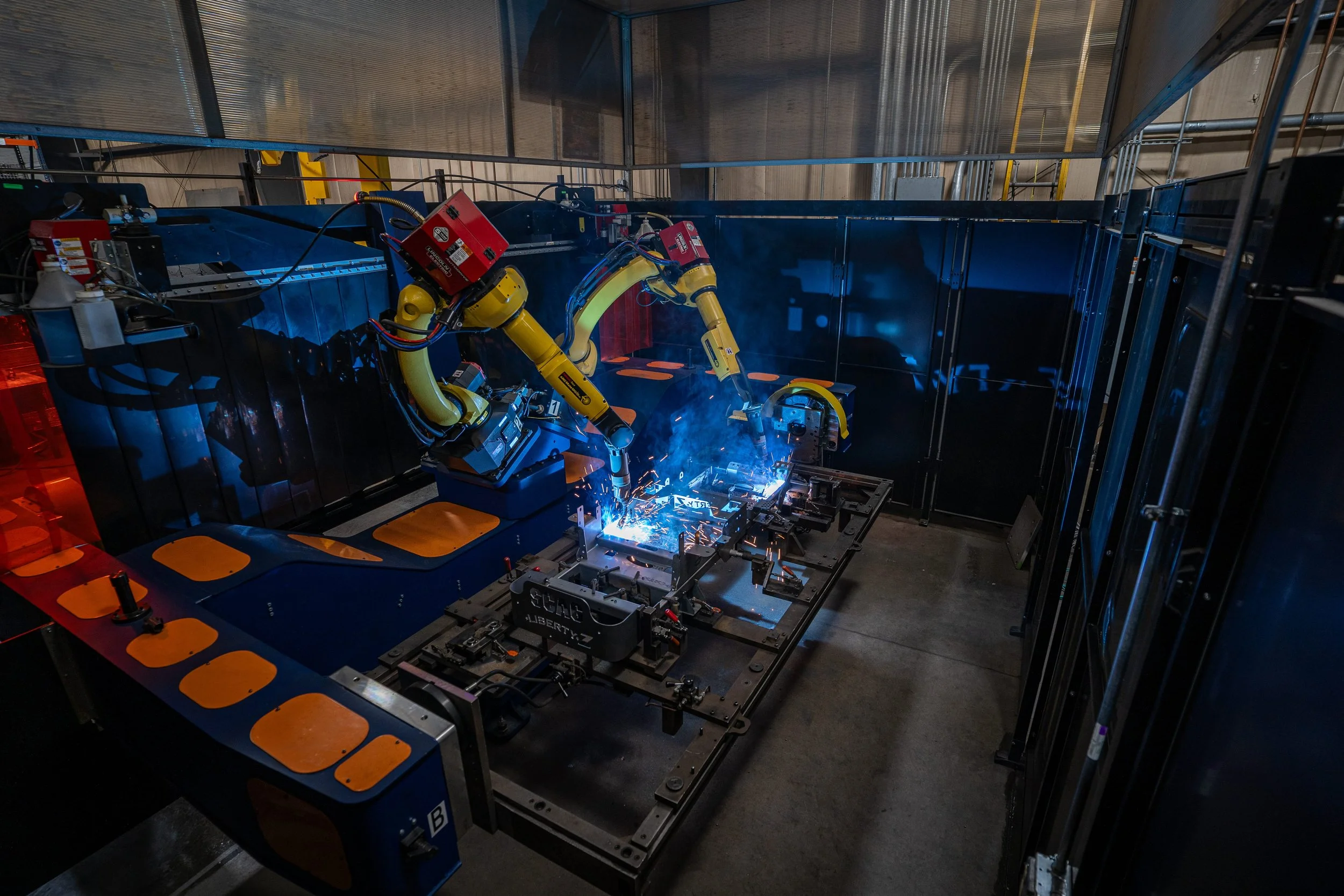
Manufacturers continue to face increasing pressure to improve productivity, reduce labor challenges, and maximize machine utilization. Many shops recognize the benefits of robotics but hesitate to move forward because they believe automation requires a complete facility redesign. In reality, many companies successfully integrate robotic systems into existing CNC layouts without disrupting their entire operation.
Modern robotic solutions offer flexibility that allows manufacturers to automate machine tending, part handling, inspection, and secondary operations while preserving much of their current infrastructure. With proper planning, shops can introduce robotics in phases and achieve measurable gains in efficiency, consistency, and throughput.
Why Manufacturers Add Robotics to Existing CNC Layouts
Many CNC shops already have substantial investments in machines, tooling, fixtures, and floor space. Replacing an entire layout rarely makes financial sense. Instead, manufacturers often seek ways to enhance their current operations through automation.
Robotics allows facilities to increase machine uptime, reduce manual handling, and support production growth without adding significant labor. By integrating robotic systems into existing cells, companies can improve output while maintaining familiar workflows.
The ability to automate without replacing proven CNC equipment makes robotics an attractive option for both small job shops and large production facilities.
Evaluating Your Current CNC Environment
Before selecting a robotic solution, manufacturers should carefully evaluate their current production environment.
A thorough assessment includes machine locations, material flow, part volumes, cycle times, operator responsibilities, and available floor space. Understanding these factors helps identify automation opportunities and potential integration challenges.
Shops should also review machine utilization data. CNC machines often spend valuable production time waiting for operators to load and unload parts. Robotics can eliminate much of this downtime and create more continuous production cycles.
Identifying the Best Automation Candidates
Not every machine or process requires immediate automation. Successful integration often begins by targeting applications that offer the highest return on investment.
Several characteristics make a CNC operation well-suited for robotic integration:
Repetitive loading and unloading tasks
Consistent part geometries
Long machine cycle times
High production volumes
Labor-intensive handling requirements
Multi-shift production schedules
By focusing on these opportunities first, manufacturers can demonstrate results quickly and build confidence in future automation projects.
Understanding Available Floor Space
Floor space plays a major role in robotic integration planning. Many facilities operate in crowded environments where every square foot matters.
Fortunately, modern robotic systems come in compact configurations designed specifically for existing manufacturing environments. Integrators can position robots beside machines, between multiple CNCs, or within flexible automation cells that maximize available space.
A detailed floor layout analysis helps determine optimal robot placement while maintaining safe operator access and efficient material movement.
Choosing the Right Robot Configuration
Different CNC applications require different robotic solutions. Selecting the right configuration ensures reliable performance and long-term success.
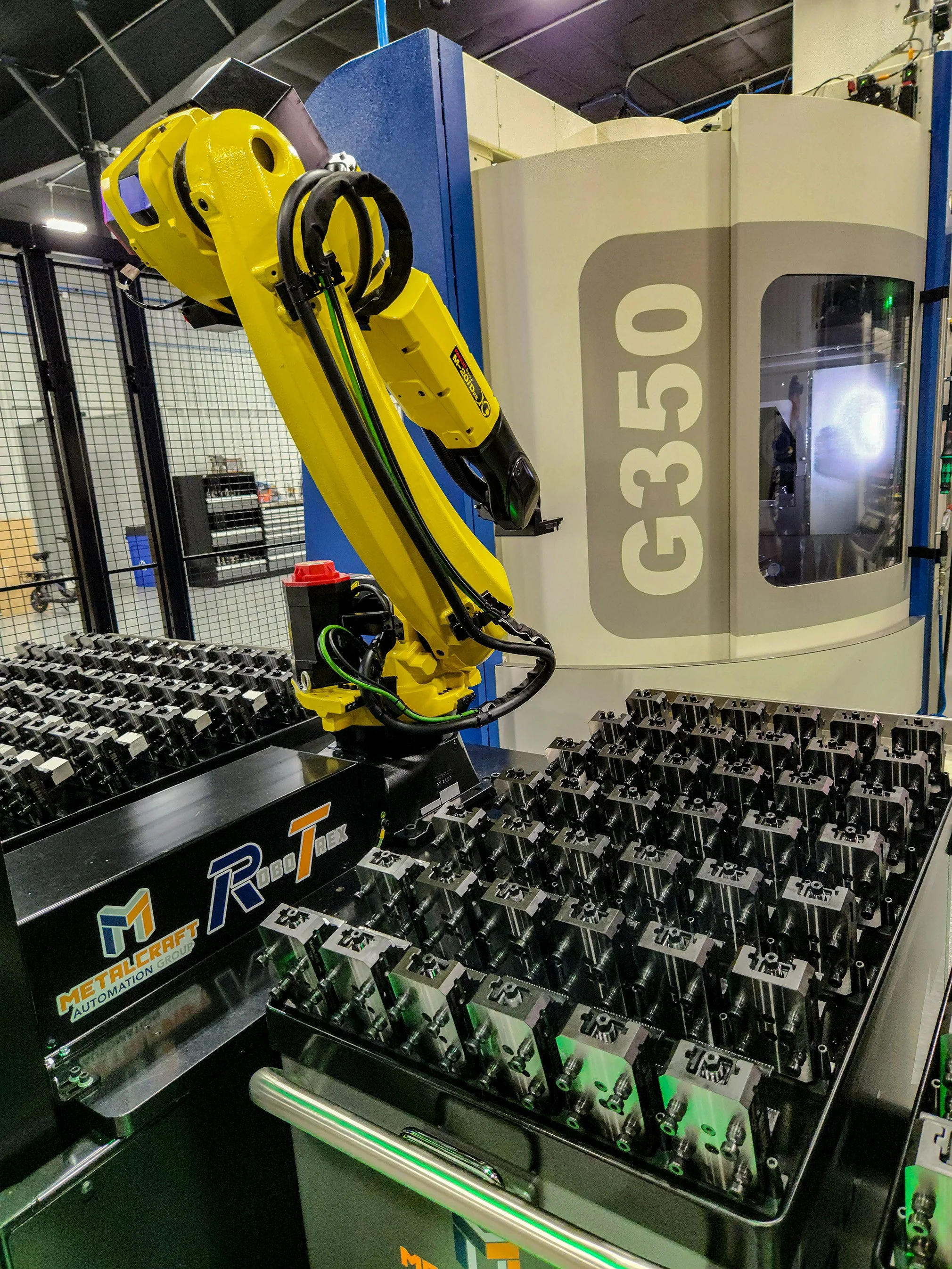
Machine tending remains one of the most common applications. In these systems, robots load raw materials into CNC machines and remove finished parts after machining.
Some operations benefit from a single robot serving one machine. Others achieve greater efficiency by allowing one robot to tend multiple machines simultaneously.
Factors such as part size, cycle time, payload requirements, and production volume influence robot selection.
Integrating Robotics With Existing CNC Controls
One common concern involves communication between robotic systems and older CNC equipment. Many manufacturers assume aging machines cannot support automation.
In reality, numerous integration methods exist. Robotic systems can communicate with CNC controls through digital inputs and outputs, communication protocols, interface modules, or custom integration solutions.
Experienced automation providers routinely connect robots to both modern and legacy CNC machines. The goal remains simple: establish reliable communication that coordinates machine operations and robotic movement.
Successful integration allows robots and machines to operate as a synchronized production system.
Addressing Safety Requirements
Safety remains a critical component of every robotic integration project.
Manufacturers must evaluate potential hazards and implement safeguards that protect employees while maintaining productivity. Modern robotic cells often incorporate safety fencing, light curtains, area scanners, interlocked gates, and emergency stop systems.
Safety requirements vary depending on robot speed, payload, operating area, and employee interaction levels. A properly designed automation system balances safety compliance with operational efficiency.
Optimizing Material Flow Around Robotic Cells
Robotics can improve machine utilization, but overall productivity also depends on efficient material movement.
Manufacturers should evaluate how raw materials enter the cell and how finished parts exit the process. Poor material flow can create bottlenecks that limit automation benefits.
Many successful robotic installations include automated storage systems, pallet stations, conveyor systems, or organized staging areas. These supporting elements help ensure the robot always has parts available to process.
Managing Tooling and Fixture Considerations
Robotic integration often requires reviewing existing tooling and workholding methods.
Fixtures must securely locate parts while allowing robots to load and unload components consistently. In some cases, manufacturers can continue using existing fixtures with minimal modification. Other applications may benefit from redesigned workholding solutions that improve robotic accessibility.
End-of-arm tooling also plays an important role. Robotic grippers must handle parts reliably without causing damage or introducing positioning errors.
Proper fixture and tooling design contributes significantly to long-term automation success.
Supporting High-Mix, Low-Volume Production
Many job shops assume robotics only works for high-volume manufacturing. Today's robotic systems offer much greater flexibility.
Advanced programming capabilities, quick-change tooling, and user-friendly interfaces allow robots to support a wide range of part types. Manufacturers can automate multiple jobs within the same cell and transition between products efficiently.
This flexibility helps smaller shops benefit from automation even when production schedules frequently change.
Preparing Employees for Automation
Successful automation projects depend on employee engagement.
Robotics does not eliminate the need for skilled personnel. Instead, it allows employees to focus on higher-value activities such as programming, quality control, setup optimization, and process improvement.
Training programs help operators understand how robotic systems function within the production environment. Employees who participate in implementation efforts often become strong advocates for automation because they see firsthand how robotics reduces repetitive manual tasks.
Reducing Downtime During Implementation
Many manufacturers worry that automation projects will disrupt production.
Careful planning minimizes downtime during installation and startup. Experienced integrators often conduct much of the system development and testing before arriving on-site. This preparation shortens implementation timelines and reduces operational interruptions.
Phased deployment strategies can further limit disruption. Manufacturers may automate one machine or cell first before expanding automation throughout the facility.
This approach allows organizations to gain experience while maintaining production continuity.
Measuring the Success of Robotic Integration
Manufacturers should establish clear performance metrics before beginning an automation project.
Common measurements include machine uptime, cycle time reduction, labor utilization, scrap reduction, throughput increases, and overall equipment effectiveness. Tracking these metrics provides objective data that demonstrates project performance.
Many facilities discover that robotic systems deliver benefits beyond initial expectations. Improved consistency, better quality control, and enhanced scheduling flexibility often accompany productivity gains.
The Role of Manufacturing Automation in Long-Term Growth
As competition increases across manufacturing sectors, companies continue seeking ways to improve efficiency while maintaining quality.
Robotics represents one of the most practical forms of manufacturing automation because it enhances existing assets rather than replacing them entirely. CNC machines remain valuable production resources, and robotic systems help those machines operate closer to their full potential.
By integrating robotics strategically, manufacturers can expand capacity, improve consistency, and create more scalable operations that support future growth.
Robotic Integration
Integrating robotics into existing CNC layouts allows manufacturers to improve productivity without completely redesigning their facilities. Through careful planning, proper robot selection, effective safety measures, and thoughtful workflow optimization, companies can automate key processes while preserving valuable equipment investments.